PV Sindhu's continued tryst with excellence

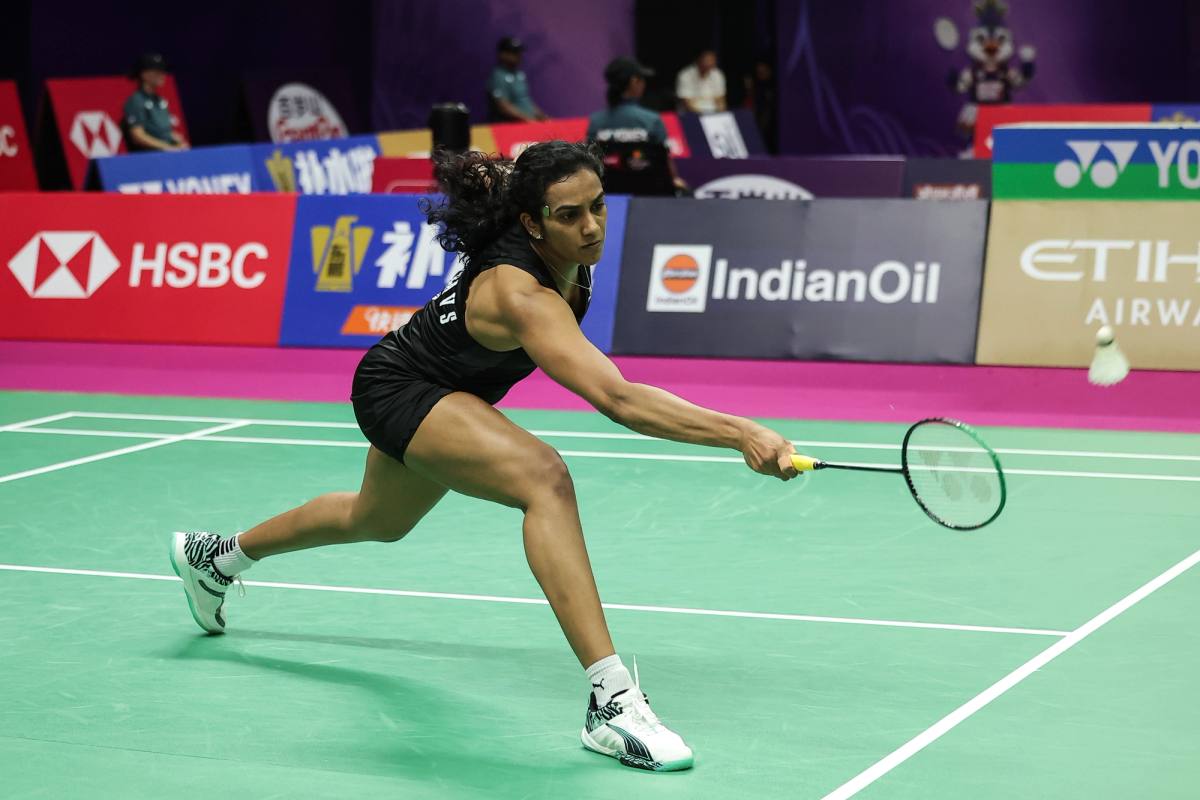
PV Sindhu - BAI Images
On a July afternoon in Tokyo, PV Sindhu did something she had not done in two years: she won a BWF World Tour title. Her 21-17, 21-17 dismantling of world No. 3 Akane Yamaguchi at the Japan Open was more than a trophy. It was an answer to a question that had trailed her for months: was the 31-year-old former world champion still capable of beating the best in the world, or was she simply running out the clock on a storied career?
That question resurfaced with painful clarity at the Indira Gandhi Indoor Stadium in New Delhi, where Sindhu's bid for a sixth World Championship medal ended in the round of 16. Ranked ninth in the world, she had arrived in fine form, dispatching Sophia Noble 21-7, 21-11 in the round of 64 and Wen Yu Zhang 21-16, 21-17 in the round of 32 without dropping a game. Then came world No. 3 Wang Zhiyi, and an 88-minute struggle. Sindhu lost the opener 11-21, roared back to take the second 21-15, and stayed locked with Wang at 16-16 in the decider before the Chinese star closed it out 21-17.
Sindhu's own postmortem was notably free of excuses. "Shayad thoda aur patience rehna tha mere side se... I should have been a little more patient," she said afterward, dissecting her own execution rather than the match's chaos. That chaos included repeated stoppages by Wang, who appeared to be managing cramps. Rather than using the situation as an alibi, Sindhu remained measured: "I don't know if she's injured or not, maybe that is her strategy or her way of doing it, you never know... but I had to be very focused and very patient." Asked broadly about resilience in a sport that offers no room for self-pity, she was matter-of-fact: "You learn, you lose a lot, you win a lot... when you lose you need to deal with it and bounce back stronger from your mistakes."
That refusal to look for excuses has defined her 2026 season, which has been a year of jagged extremes rather than a clean redemption arc. Weeks before the Worlds, at the China Open, Sindhu held a one-game lead before falling to Chen Yufei, 16-21, 22-20, 21-18 in a grueling round-of-16 clash. Her season record sits as a testament to her battle to consistently close out matches against elite competition.
Behind these swings lies a support system rebuilt almost from scratch. After a chaotic stretch cycling through coaches, including Park Tae-sang, Mulyo Handoyo, Agus Dwi Santoso, Kim Ji Hyun, and Malaysia's Muhammad Hafiz Hashim, Sindhu settled in January 2025 into training under Irwansyah Adi Pratama, a former Indonesian men's singles coach appointed as the Badminton Association of India's national women's singles coach, who has continued to travel and train with her through the 2026 season. "I do believe Sindhu can reach the top again. That's the reason I'm here," Irwansyah said when he took over, promising to sharpen her natural attacking instincts with more speed and power.
Around him sits a team Sindhu herself has named in detail: Prakash Padukone, the All England legend she calls her "sensei, mentor, and the change-maker I needed," who monitors her sessions and advises on technical and tactical nuance at his Bengaluru academy; U. Vimal Kumar, the academy's head coach and a national selector, who oversees her broader training environment; Wayne Lombard has joined the team, and as the head of performance, he makes sure that the elite athlete gets in as much quality sleep as she does training.
Vimal Kumar has noted that this stabilized structure, paired with a deliberate shift toward strength conditioning over sheer court hours, reflects a broader trend among seasoned athletes seeking to extend their competitive primes into their thirties. Sindhu credits the same forces in simpler terms: "sports science, physio, and smart recovery" as the foundation of her physical capacity this year.
What remains unresolved is the mental snap at the finish line: the dropped leads against Chen Yufei, the missed patience against Wang Zhiyi. Sindhu does not deny it. Asked, whether she had anything left in the tank after 90 punishing minutes against Wang, she turned the question into a training note rather than a lament: "That is a positive thing. I think I have to just go back and maybe just work a little bit on my strokes."
With the Asian Games approaching and the Los Angeles Olympics of 2028 firmly on her radar, Sindhu's outlook has calcified into something closer to method than hope. She continues to rely on the guidance of the team surrounding her to navigate the physical and mental demands of world-class play. At 31, with a rebuilt team behind her and a habit of turning defeat into homework, she is betting that stubbornness, more than talent alone, is what carries champions past thirty. "I will keep trying," assured Sindhu.

Keep Reading

The Capacity for Suffering
On the baseline, greatness is written in sweat and split seconds: endure the long rally, find the line under pressure, adapt at match point, and take the next…
US Open: No Sinner, No Certainty in an Open Draw
Jannik Sinner is out, Alexander Zverev is top seed and Carlos Alcaraz returns after four months. Inside the 2026 US Open draw at Flushing Meadows.
US Open: The Crucible at Flushing Meadows
Discover how tennis stars battle grueling injuries and physical strain at the US Open, competing under the electric lights of Flushing Meadows in Queens, NY.