US Open: No Sinner, No Certainty in an Open Draw

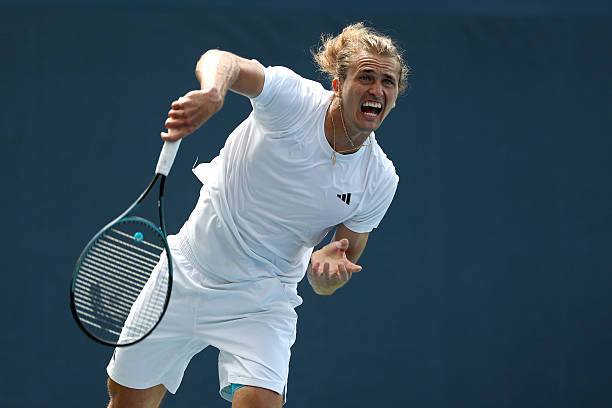
Alexander Zverev - Photo by Al Bello/Getty Images
Summer in Queens ends not with a whisper, but with the acoustic roar of Arthur Ashe Stadium. Yet as the 2026 US Open draws its opening breath, the men's draw feels defined by an empty space. Jannik Sinner, the world No. 1 whose precise, relentless ball-striking dominated the season’s narrative, is not here. A right knee injury sustained on the eve of the tournament forced his withdrawal—his first absence from a major since his debut as a teenager in 2019. In tennis, an absent champion leaves behind more than an empty line on a draw sheet; he leaves a psychological vacuum, a quiet question mark hovering above every court in Flushing Meadows.
That vacuum elevates Alexander Zverev to the top seed. Zverev arrives in New York holding a formidable 18-2 record at the majors this season—a stat line forged by a Roland Garros crown and a Wimbledon final. Yet beneath the glitter of his Grand Slam ledger lies a cooler hard-court reality: a 17-7 record that feels almost fragile compared to the sheer fire packed into the lower half. For Zverev, the fortnight is not merely about navigating his section; it is an existential test of whether he can command a draw rather than simply inherit one.
Slotted at the bottom as the second seed sits Carlos Alcaraz, returning to the tour after four long months in exile. A wrist injury sustained in April stripped him of his beloved spring clay, the lawns of Wimbledon, and the entire North American summer swing. New York is not a victory lap for Alcaraz; it is a baptism by fire. To enter Flushing Meadows cold, with four months of competitive rust clinging to his racquets, requires a staggering brand of nerve. He opens against Roman Safiullin, a player whose low-margin, all-out attack is practically designed to rush a man searching for his timing. The betting markets have already felt the tremor, dropping Alcaraz’s implied probability from 35 percent down to 26. Yet in Queens, rust has a way of melting under the heat of competition, and Alcaraz remains the outright favorite for a reason.
If Zverev’s top half feels like a calculated path, the bottom half of the men’s draw is a kinetic congestion zone. This is where the true hard-court form of 2026 resides. Arthur Fils arrives carrying the momentum of his maiden Masters 1000 crown in Cincinnati (22-7 on the surface), his forehand behaving less like a stroke and more like a force of nature. Alongside him sits Ben Shelton (19-6), who recently became the first man since Rafael Nadal to defend the Canadian title, playing with that intoxicating, unfiltered swagger that turns Arthur Ashe into an amphitheater. Add Frances Tiafoe (21-10)—who transforms New York into his personal stage—and Daniil Medvedev (20-8), the chess master whose geometric defense turns raw power against itself, and you have a bottom half heavy with proven hard-court pedigree.
Then there is the immortal anomaly: Novak Djokovic. At thirty-nine, Djokovic approaches the sport with a minimalist’s precision. He has played just ten hard-court matches all year, conserving his body for moments like this. Projected to cross paths with Medvedev in a blockbuster quarterfinal, Djokovic’s presence is a reminder that experience at Flushing Meadows is its own currency. In that same section, Stan Wawrinka—a decade removed from his legendary 2016 title run—opens against Matteo Berrettini, serving as a nostalgic bridge to an era of ungodly baseline power.
Shift focus to the women’s singles draw, and the narrative becomes equally rich, defined by a clash between explosive first-strike ball-striking and tactical adaptability. The Laykold acrylic surface at Flushing Meadows, baked under the relentless August sun, amplifies aggressive second-serve returns, turning every service game into a high-stakes duel over baseline real estate.
In the upper half of the women's field, the tennis is defined by sheer velocity. The game’s elite power-hitters will attempt to command the center of the court early, taking the ball on the rise to push opponents deep outside the doubles alleys. But as afternoon light fades into the cool indigo of night sessions, the conditions undergo a dramatic shift. Under the Arthur Ashe roof, as humidity settles over the court, the ball heavy-up and ball speed slows down, handing a tactical edge to defense-first movers, counter-punchers, and players equipped with the patience to construct point after grueling point.
The WTA draw features a lethal dangerous second tier of contenders—tactical sleepers armed with heavy kick serves, low slice variations, and net-seeking reflexes. In a field where the top seeds carry immense pressure, the champion will likely be the woman who best navigates the brutal day-to-night atmospheric transitions while keeping her unforced errors strictly in check.
What makes the US Open uniquely magnetic is its unforgiving environment. It is not just the tennis; it is the distant hum of the N train, the sweet scent of honey deuces in the warm evening air, and the sheer noise of 23,000 fans demanding athletic drama. Tennis at Flushing Meadows is a high-speed interrogation of character. As the main draw play begins, the storylines are set, but the resolutions remain blissfully unwritten, waiting to be carved into the blue acrylic of Queens.

Keep Reading
The Capacity for Suffering
On the baseline, greatness is written in sweat and split seconds: endure the long rally, find the line under pressure, adapt at match point, and take the next…
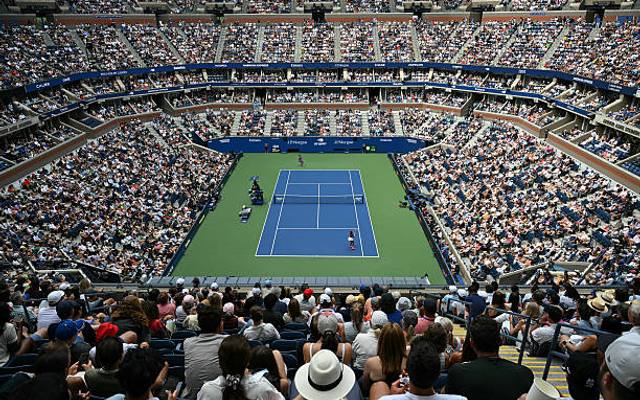
US Open: The Crucible at Flushing Meadows
Discover how tennis stars battle grueling injuries and physical strain at the US Open, competing under the electric lights of Flushing Meadows in Queens, NY.
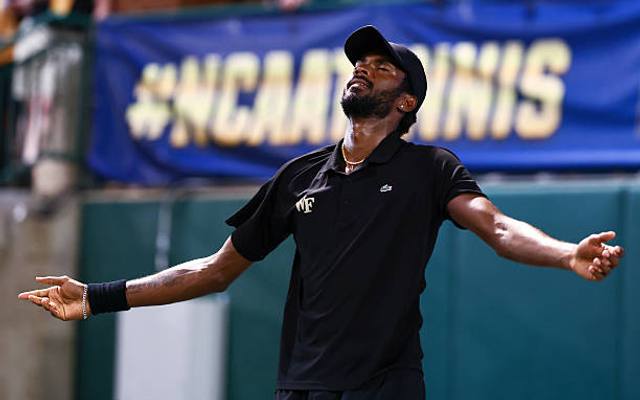
DK Suresh produces a stunning victory over Marcos Giron
Dhakshineswar Suresh stunned Marcos Giron at Winston-Salem, becoming just the second Indian after Prajnesh Gunneswaran in 2019 to win a main draw match there