Indelible footprints of greatness decorate the badminton World Championships

The World Championships were born out of a simple need: badminton wanted its own definitive summit, not just the symbolic crown of the All England Open. In 1977, Malmo hosted the inaugural edition, and from that point on, the tournament became the place where eras were defined, dynasties announced and individual genius etched into the sport’s memory. The heritage of great champions in this event is not just a list of names and years; it is a shifting map of power, style and geography.
From juggernauts to an open field
For nearly three decades, the roll of honour reads like a chronicle of concentrated dominance: China, Indonesia, Denmark, Korea and Malaysia share most of the golds, with China emerging as the juggernaut that would bend the sport to its will. Once China entered in 1983, women’s singles and doubles titles began to cluster around its stars, and by 1987 the team swept all five gold medals, a feat repeated in 2010 and 2011. Men’s singles became synonymous with Lin Dan’s ruthless control; his multiple titles, including those in 2011 and 2013, turned the World Championships into a stage for a singular kind of greatness that combined physical dominance with cold tactical clarity. Park Joo Bong and Zhao Yunlei, with their multiple crowns in doubles and mixed, added to the sense that this event could be ruled by a few exceptional polymaths who mastered more than one discipline.
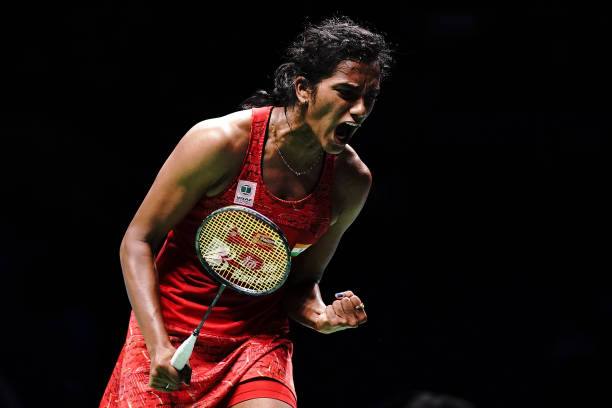
And yet, the medal table tells a second story: as the tournament schedule shifted from triennial to biennial and then to an almost annual summer fixture, the field slowly opened. In the second decade of the millennium, nations like Japan, Thailand, India, Chinese Taipei, Canada and France began to puncture this hegemony, claiming golds that once seemed reserved for a small club. Ratchanok Intanon’s women’s singles title in 2013, Carolina Marin’s run from 2014, Loh Kean Yew’s breakthrough in 2021 and P V Sindhu’s gold in 2019 mark a new cartography of excellence, where the “great champion” is no longer simply East Asian or European, but convincingly global.
Cities, eras and the champions who defined them
Certain host cities have become shorthand for turning points. Copenhagen, with its record five editions, has repeatedly staged shifts in the balance of power; in 2023, it crowned Kunlavut Vitidsarn as Thailand’s first men’s singles champion and An Se Young as Korea’s first women’s singles winner, while Seo Seung Jae completed a rare double, echoing Kim Dong Moon’s feat in 1999. Paris, less than a year after hosting the Olympics, delivered one of the great individual campaigns in 2025, as Shi Yu Qi ground through four exhausting matches to claim his first world title, an effort that felt more like endurance art than sport. The roll-of-honour entries that follow—Axelsen’s twin crowns, Momota’s back‑to‑back titles, Loh’s disruptive win, Vitidsarn’s ascent—trace a lineage in which champions must not only win once, but sustain excellence across an increasingly dense calendar.
Against this backdrop, New Delhi 2026 arrives as one of the most open editions in history. Apart from An Se Young in women’s singles and Liu Sheng Shu/Tan Ning in women’s doubles, there are “no overwhelming favourites”, signalling a moment when heritage is less about defending dynasties and more about expanding who gets to write themselves into the narrative of greatness.
India’s evolving imprint – from Hyderabad 2009 to Sindhu’s gold
India’s relationship with the World Championships has evolved from peripheral presence to sustained contention, and the results captures that shift with both hard numbers and subtle framing. Fifteen World Championships medals, including a continuous run of podium finishes from 2011 onwards, signal that Indian players are no longer outsiders picking off occasional bronzes but regular actors in the medal drama. P V Sindhu’s 2019 title, reframed India’s badminton identity: not just a factory of gritty quarterfinalists, but a country capable of producing a world champion at the sport’s most demanding event.
To understand how far this journey has come, Hyderabad 2009 remains a crucial reference point. China’s near‑sweep of four gold medals, with the only interruption coming in mixed doubles. Lin Dan’s third world title there—arriving as the only two‑time champion after Yang Yang—felt almost inevitable; he dropped just one game, moved through the draw with a kind of detached supremacy, and turned his hat‑trick into an extension of his Olympic triumph from Beijing. Hyderabad’s iconic match, however, was the men’s doubles final between Cai Yun/Fu Haifeng and Jung Jae Sung/Lee Yong Dae, a 75‑minute epic that ended 28–26 and still stands as one of the greatest doubles contests in history, its scoreline testifying to the emotional density of every rally.
For Indian badminton, Hyderabad 2009 was less about titles and more about atmosphere and aspiration. Hosting the premier individual event in a city that would become synonymous with Pullela Gopichand’s coaching revolution and Sindhu’s rise gave the sport a new spatial centre of gravity in the country. The tournament unfolded under the shadow of a bird‑flu scare, yet once play began, the narrative quickly narrowed to pure badminton, a telling reminder of how global health anxieties can be temporarily bracketed by televised spectacle. The legacy of that week, measured today in India’s steady medal stream and a para‑badminton programme that produces world champions and Paralympic medallists, suggests that Hyderabad’s importance lies not only in Chinese golds, but in how it helped normalise world‑class badminton as a domestic experience.
A layered heritage
What does it mean, now, to step into the draw as a contender in New Delhi, conscious of this heritage of champions? The leading seeds fact file shows Indian names embedded in the upper tiers of both singles and doubles; players like Satwiksairaj Rankireddy and Chirag Shetty, already semifinalists at the Worlds, and emerging talents such as Ayush Shetty are positioned as dangerous floaters rather than outsiders. Badminton in India has acquired dense respect, a country where 1,000 athletes are in national training programmes and where the Paris 2024 Olympics saw badminton as the most followed sport domestically. Heritage is no longer something imported from China, Denmark or Indonesia, but being produced across able‑bodied and para events, across metropolitan centres and training academies.
The World Championships have always been about crowning the best player or pair in a given year. Increasingly, they are also about mapping how power moves—between nations, between generations, between styles of play. In Malmo, Hyderabad, Copenhagen, Paris and now New Delhi, great champions have not only lifted trophies; they have changed what feels possible for those who follow them.
P V Sindhu - Photo by Lintao Zhang/Getty Images
2018 BWF Badminton World Championships
Keep Reading

The Capacity for Suffering
On the baseline, greatness is written in sweat and split seconds: endure the long rally, find the line under pressure, adapt at match point, and take the next…
US Open: No Sinner, No Certainty in an Open Draw
Jannik Sinner is out, Alexander Zverev is top seed and Carlos Alcaraz returns after four months. Inside the 2026 US Open draw at Flushing Meadows.
US Open: The Crucible at Flushing Meadows
Discover how tennis stars battle grueling injuries and physical strain at the US Open, competing under the electric lights of Flushing Meadows in Queens, NY.