Alcaraz Survives Zverev Epic to Reach Melbourne Final

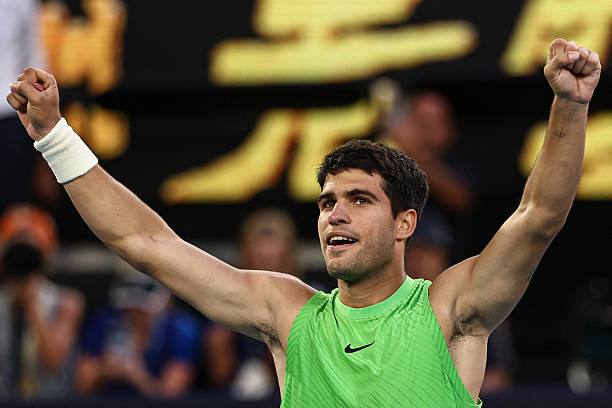
Carlos Alcaraz and Alexander Zverev walked off Rod Laver Arena having played the kind of match that reorganises how a generation thinks about pressure, resilience, and the meaning of “almost.” In five hours and 27 minutes—the longest semi‑final in Australian Open history—Alcaraz dragged himself past Zverev 6–4, 7–6(5), 6–7(3), 6–7(4), 7–5, into yet another major final and one step from the career Grand Slam.
What made it remarkable was not just the length but the emotional contour. Alcaraz twice held a two‑sets‑to‑love lead, saw it vanish as an upper right leg issue tightened his movement, and still found a way back from 3–5 in the fifth against a locked‑in Zverev who, at that point, was landing first serves and forehands with a kind of grim, relentless clarity. For long stretches the German looked like the more stable player: heavy serves, disciplined shot selection, and tiebreak tennis that, for once, did not blink.
And yet, the story of Alcaraz’s young career is that scorelines and narratives are provisional until he decides otherwise. Already a champion at the US Open, Roland Garros, and Wimbledon, with six major titles from eight finals across 2022–2025, he arrived in Melbourne seeking the last piece of the career Grand Slam puzzle. Here, facing his first Australian Open semi‑final and an opponent who has beaten him on big stages before, he produced another of those twist‑the-dial performances: imperfect, physically compromised, but tactically brave when it mattered most.
The fifth set distilled all of it. Down 3–5, having ceded two tiebreaks in succession, Alcaraz began returning closer to the baseline, taking Zverev’s second serve earlier and threading backhands down the line that asked a more pointed question of the German’s movement. He started layering in drop shots again—not as showmanship, but as pressure valves, forcing Zverev forward and testing his legs after hours of baseline attrition. The decisive break at 5–5 came not from a miracle winner but from cumulative weight: deeper returns, one more ball back, one more forehand driven heavy to the Zverev backhand corner.
Zverev’s side of the story is more complicated and, in some ways, more brutal. This was the kind of match that would have neatly completed a redemption arc: from the trauma of losing the 2020 US Open final from two sets up, through a five‑match losing streak in major semi‑finals, to finally breaking that pattern with a first Roland Garros final in 2024, where he fell to Alcaraz in yet another five‑setter. Here in Melbourne, he was again within touching distance of a different narrative, up a break in the fifth against the world No. 1, after outlasting him in back‑to‑back tiebreaks.
What lingers is how narrow the margin is between “perennial contender” and “Grand Slam champion.” Zverev has now reached three major finals and a long list of semi‑finals, while his Olympic gold and ATP Finals titles show he is not inherently allergic to big stages. Yet at the majors, the most indelible images remain ones of proximity rather than conquest—serving for the US Open, leading deep in fifth sets, standing on the brink of a signature win against the sport’s emergent centre of gravity and seeing it slip.
From a tennis perspective, there was much to admire. Zverev’s forehand, so often framed as a liability under pressure, held up for most of the evening; when he stepped inside the baseline, he was able to rush Alcaraz’s backhand and force shorter replies. His serve, too, looked like the weapon that carried him to Paris and that many assumed would define his hard‑court Slam breakthrough: long runs of first serves above 70%, few double faults in the middle sets, a willingness to go big out wide on critical points.
But the match also underlined a recurring theme: against the very best, Zverev’s margins shrink dramatically once the finish line appears. In the fifth set, the forehand started dropping shorter, the second serve a fraction safer, the court positioning a step more conservative. Alcaraz, even hobbling at times, sensed that retreat and expanded into it—moving forward, taking on risk, trusting that his tolerance for chaos in the closing games would hold.
Alcaraz enters another major final with an already historic résumé for a 22‑year‑old: multiple Slam titles across three surfaces, a win over Zverev in a Roland Garros final, wins over Novak Djokovic in Wimbledon finals, and now a first Australian Open final after the longest semi‑final in the tournament’s history. The pattern is clear—his game is travelling, his body (injury niggles notwithstanding) is absorbing multi‑hour wars, and his competitive instincts in fifth sets remain among the sharpest we have seen since the peak of the Big Three.
For Zverev, by contrast, this Melbourne run is another chapter in a career defined by deep runs and thin margins. Reaching yet another semi‑final, pushing the world No. 1 to five sets, and leading late in the decider speaks to a level of sustained excellence that few of his peers can match. But until he converts more of these positions into Slam titles, the discourse will continue to orbit the same question: is this a story of steady progress towards eventual vindication, or the crystallisation of a ceiling?
In the cool of the Melbourne night, with Alcaraz rolling towards another Sunday appointment and Zverev again left a step short, the match felt like both an instant classic and a subtle reassertion of hierarchy. One player keeps turning knife‑edge epics into building blocks of a legacy; the other, for now, continues to carry the weight of what almost was.
Carlos Alcaraz - Photo by Izhar Khan / AFP via Getty Images

Keep Reading

The Capacity for Suffering
On the baseline, greatness is written in sweat and split seconds: endure the long rally, find the line under pressure, adapt at match point, and take the next…
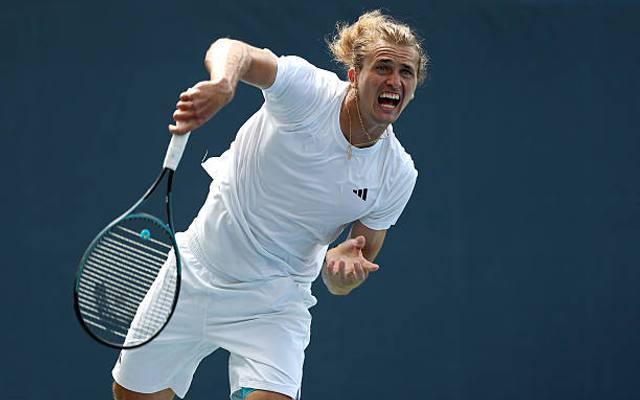
US Open: No Sinner, No Certainty in an Open Draw
Jannik Sinner is out, Alexander Zverev is top seed and Carlos Alcaraz returns after four months. Inside the 2026 US Open draw at Flushing Meadows.
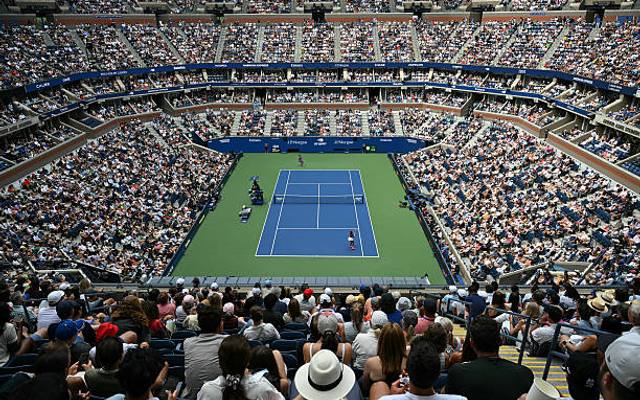
US Open: The Crucible at Flushing Meadows
Discover how tennis stars battle grueling injuries and physical strain at the US Open, competing under the electric lights of Flushing Meadows in Queens, NY.