Power Returns: Sabalenka-Rybakina Final Promises Thunderous Australian Open Encore

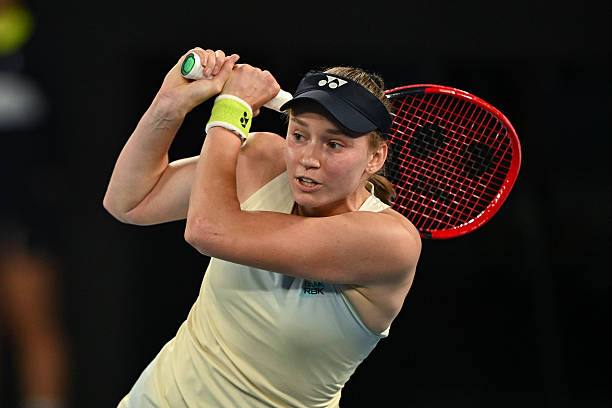
The Australian Open women's final will deliver precisely what Melbourne Park's fast courts demand: uncompromising power meeting relentless aggression in a rematch that carries the weight of unfinished business.
Aryna Sabalenka and Elena Rybakina will contest Saturday's championship match at Rod Laver Arena, reprising their 2023 final when Sabalenka rallied from a set down to claim her maiden Grand Slam title 4-6, 6-3, 6-4. Three years later, both have evolved considerably, though the fundamental dynamic—two of tennis's biggest hitters refusing to yield an inch—remains unchanged.
The world number one arrives at her fourth consecutive Australian Open final without dropping a set through six matches, accumulating 172 winners—more than any player in the draw. Her 6-2, 6-3 semifinal dismissal of Elina Svitolina extended her Melbourne Park dominance to 20 consecutive match wins, a streak that includes back-to-back titles in 2023 and 2024 before last year's heartbreaking final defeat to Madison Keys.
Rybakina's path proved equally commanding if marginally more dramatic. Her 7-5, 6-1 quarterfinal destruction of second seed Iga Świątek demonstrated the Kazakh's capacity to elevate when confronting elite opposition, winning eight of the final nine games after a competitive opening set. Against Jessica Pegula in the semifinals, Rybakina twice failed to serve out the match in the second set but steadied in the tiebreak to prevail 6-3, 7-6(7), booking her second Melbourne final appearance.
The 2023 Final: Blueprint and Evolution
Their 2023 encounter produced precisely the kind of high-quality thriller Melbourne finals demand. Rybakina claimed the opening set behind flat, penetrating groundstrokes that induced ten forced errors from Sabalenka, who also neutralized five aces with five double faults at inopportune moments.
The match's decisive sequence arrived in the second set's opening game. Facing two break points and potentially falling a set-and-break down, Sabalenka delivered two blazing forehands to hold, fundamentally altering the match's momentum. She broke for 3-1 and never looked back, ultimately accumulating 51 winners against 28 unforced errors while Rybakina finished with 31 and 25 respectively.
The key statistic revealed Sabalenka's sustained pressure: she generated thirteen break points to Rybakina's seven, converting three while constantly forcing the Wimbledon champion to defend. In the final game, with nerves creeping in, Sabalenka required four championship points—squandering the first two before Rybakina earned a break point with a cross-court forehand winner. Sabalenka saved it with a big serve, then sealed victory on her fourth opportunity.
Current Form and Head-to-Head
Sabalenka holds an 8-6 career advantage in their fourteen meetings, though recent history suggests a tightening rivalry. Rybakina claimed their most recent encounter—the WTA Finals championship in Riyadh last November—in straight sets 6-3, 7-6, marking her third victory in their last five matches.
Both arrive with identical 10-0 records in 2026, having captured warm-up titles in Brisbane (Sabalenka) and Auckland (Rybakina). Neither has dropped a set in Melbourne, though Sabalenka's dominance appears marginally more emphatic—she's faced just five break points across six matches while winning 70 percent of first-serve points.
Rybakina leads all women in Melbourne with 35 aces, using her 121 mph serve to devastating effect. She's won eight consecutive Top 10 matches and eighteen of her last nineteen overall, losing only to Karolina Muchova in Brisbane earlier this month.
Tactical Keys
Statistical analysis from their 2023 final revealed Sabalenka's backhand groundstroke as the match's difference-maker—the only stroke to achieve a positive plus/minus score in rally exchanges. Over the final two sets, she dramatically improved her first-serve return percentage while cutting double faults to one per set, promoting longer rallies that favored her baseline dominance.
Rybakina's serve remains her primary weapon, though Pegula noted after their semifinal that "her ball stays quite low," making it difficult for taller players like Rybakina to maintain optimal strike zones. Sabalenka at 6'0" won't experience this challenge, but must handle Rybakina's flat, heavy groundstrokes that carry minimal margin for error.
The decisive factor likely rests on second-serve efficiency. In 2023, the winner of each set proved to be the player with superior second-serve win percentage. Both closed with identical 71 percent first-serve points won, but Sabalenka's improvement behind her second delivery as the match progressed ultimately proved decisive.
The Stakes
For Sabalenka, victory would deliver her third Australian Open title in four years, cementing Melbourne as her fortress and extending her Grand Slam tally to five. She's reached the semifinals or better at twelve of her last fourteen majors—dominance rivaling anyone in the sport.
Rybakina seeks redemption for 2023 while capturing her second Grand Slam title, three-and-a-half years after Wimbledon 2022. Despite her obvious talent—the serve, the groundstroke power, the mental fortitude—she's converted just one of six Grand Slam semifinals into a title. Saturday offers validation that her elite capabilities can consistently deliver on tennis's biggest stages.
Both players have publicly acknowledged the challenge awaiting them. "I think her shots are heavy, deep, flat balls," Sabalenka said. "It's not easy to work with, but we have a great history. We had a lot of great battles, a lot of finals we played. I'm looking forward to battle this power."
Expect nothing less than thunderous. Three years ago, they needed two hours and twenty-eight minutes to settle their first Melbourne final. Saturday's encore promises similar duration and intensity—two champions refusing to concede ground, two serves approaching 120 mph, two baseline games designed to end points emphatically rather than prolong them.
Melbourne Park's fast courts accommodate no other style. The final will be decided by who can sustain their aggression longest without cracking under pressure—precisely as it was in 2023.
Elena Rybakina - Photo by Daniel Kopatsch/Getty Images

Keep Reading
The Capacity for Suffering
On the baseline, greatness is written in sweat and split seconds: endure the long rally, find the line under pressure, adapt at match point, and take the next…
US Open: No Sinner, No Certainty in an Open Draw
Jannik Sinner is out, Alexander Zverev is top seed and Carlos Alcaraz returns after four months. Inside the 2026 US Open draw at Flushing Meadows.
US Open: The Crucible at Flushing Meadows
Discover how tennis stars battle grueling injuries and physical strain at the US Open, competing under the electric lights of Flushing Meadows in Queens, NY.