Warm touch of Camaraderie helps Europe dominate America in the Ryder Cup

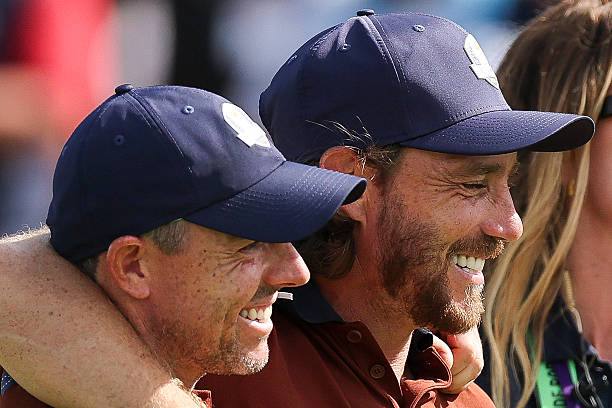
Bethpage Black was supposed to be a cathedral for American power golf, a venue where noise and length would suffocate Europe’s rhythm. Instead, as the Saturday morning foursomes closed and the scoreboard glowed 8½–3½ in Europe’s favor, it was the visitors who looked like they’d been born for this stage. Not since 1979, when the Ryder Cup expanded into its modern Europe-versus-USA format, has a road team swept the first three sessions. History has been bent by something less tangible than pure shot-making: the quiet, insistent power of camaraderie.
The morning that set the tone
Friday’s opening foursomes cracked the American façade almost immediately. Luke Donald’s pairings were a masterclass in chemistry: Jon Rahm with Tyrrell Hatton, Rory McIlroy with Tommy Fleetwood, Ludvig Åberg with Matt Fitzpatrick. They weren’t just chosen for statistics, though the numbers lined up — they were built on trust. In alternate shot, the format that exposes mismatched egos and punishes every loose swing, Europe’s duets hummed in harmony.
Rahm and Hatton throttled Bryson DeChambeau and Justin Thomas 4 & 3, alternating firepower with Hatton’s short-game grit. Åberg and Fitzpatrick were even more ruthless, dispatching world No. 1 Scottie Scheffler and Russell Henley 5 & 3 with the kind of precision golf that leaves opponents blinking. And McIlroy–Fleetwood, a partnership now nicknamed “Fleetwood Mac,” dismantled Morikawa and English 5 & 4. Only the battle-hardened Cantlay and Schauffele spared the U.S. a whitewash.
Three points to one, and the atmosphere shifted. The rowdy Long Island crowd went quiet. Europe had taken the sting out of the arena before lunch.
The afternoon answer — but Europe stays steady
Four-balls, a format that lets individuals swing freely, gave the Americans room to strike back. Cameron Young and Justin Thomas produced a 6 & 5 demolition, the kind of win designed to jolt a team’s spirit. DeChambeau’s aggression lit sparks, too. Yet Europe did not bend. Rahm, again the heartbeat of the side, paired with Sepp Straka to deliver another vital point. McIlroy and Shane Lowry scrapped to the finish and claimed a half. When the dust settled, Europe had won the session too.
The scoreboard read 5½–2½, but the deeper story was psychological. Whenever the U.S. threatened to swing momentum, a European pairing met the moment with calm. That rhythm — part planning, part shared confidence — traveled into Saturday.
Saturday: a historic statement
The second day began with the same pattern. McIlroy and Fleetwood rolled again, this time 3 & 2 over Morikawa and English. Rahm and Hatton, still buzzing from Friday’s highlight reel, stacked another point. Robert MacIntyre and Viktor Hovland ground out a 1-up win over Henley and Scheffler, a match that could have offered the Americans hope but instead slammed another door.
Only DeChambeau and Young managed resistance, beating Åberg and Fitzpatrick. By then, though, the damage was clear: Europe had taken three straight sessions on U.S. soil. The scoreboard: 8½–3½. The Ryder Cup’s equilibrium had shifted.
The shot that captured it
The defining moment of this swing wasn’t a towering drive or a booming putt. A remarkable wedge from the thick fescue on the sixth on Friday was already magical. Jon Rahm would produce another on Saturday. Will the ball sitting awkwardly above him in gnarly grass, on the bank of the bunker, he produced a chip that not only found the green but found the hole. The crowd gasped, his partner Hatton roared, and the point tilted. It was artistry under pressure, but more importantly, it was a shot made in the knowledge that the man beside him believed he could pull it off. Camaraderie doesn’t hole chips — but it makes them feel inevitable.
Numbers that tell the story
DataGolf’s models had tilted narrowly to the U.S. before the event. On paper, the Americans owned more raw distance and stronger approach play. Yet the live data flipped the forecast. Europe gained heavily on the greens, out-putting the U.S. by a wide margin across the first three sessions. They also controlled the short-game categories: scrambling, up-and-downs, the unglamorous margins that Ryder Cup golf exaggerates.
It wasn’t that Europe suddenly became better players than the Americans. It was that in pairs, in rhythm, under noise, their skills meshed in ways that multiplied impact. Rahm’s putting surges made Hatton bolder off the tee; Fleetwood’s accuracy freed McIlroy to unleash driver. Statistical edges became psychological advantages.
The cultural edge
Donald’s captaincy leaned into continuity. Eleven of his twelve players were veterans of Rome in 2023. They rehearsed not only swings but situations, even simulating crowd hostility with VR headsets that piped in jeers. By the time they walked into Bethpage’s amphitheater, the noise felt like background music.
Contrast that with the Americans, who still seemed to be searching for their partnerships on the fly. Stars are not the same thing as teammates. In foursomes especially, mismatched rhythm becomes exposed. The Americans found out the hard way that chemistry can be worth more than ranking points.
What comes next
The Ryder Cup is not won on Saturday morning, and Europe knows how quickly momentum can reverse. But an 8½–3½ lead is no ordinary cushion. It allows Donald to rotate his players, to protect form, to manage fatigue. It forces the Americans to gamble, to chase points, and to carry the weight of needing a historic comeback.
For Europe, the formula has been consistent: pairings that trust each other, short-game execution, and the camaraderie that turns pressure into belief. At Bethpage Black, in the lion’s den, it has carried them to the cusp of something historic.
The lesson is simple. In golf, brilliance wins holes. In the Ryder Cup, belief — shared, contagious, lived out loud in the team room — wins weeks. Europe, together, are showing just how heavy that belief can weigh on a scoreboard.
Photo by Michael Reaves/PGA of America/PGA of America via Getty Images

Keep Reading
The Capacity for Suffering
On the baseline, greatness is written in sweat and split seconds: endure the long rally, find the line under pressure, adapt at match point, and take the next…
US Open: No Sinner, No Certainty in an Open Draw
Jannik Sinner is out, Alexander Zverev is top seed and Carlos Alcaraz returns after four months. Inside the 2026 US Open draw at Flushing Meadows.
US Open: The Crucible at Flushing Meadows
Discover how tennis stars battle grueling injuries and physical strain at the US Open, competing under the electric lights of Flushing Meadows in Queens, NY.