Ryder Cup - Donald's Europeans ride the rough tide at Bethpage to snatch control

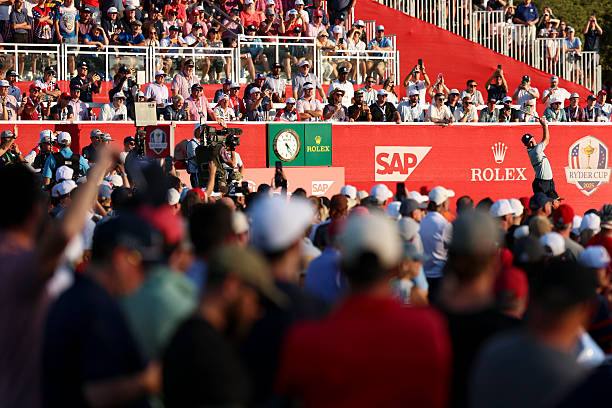
Luke Donald came to Bethpage Black with a plan and, by the time darkness fell on Friday, his Europe team built the kind of cushion that makes Bethpage look like a town in central Europe. The Americans fought tooth and nail in the afternoon, but the visitors displayed just enough nerve to steal the edge. The 5½–2½ lead isn’t just a number — it’s a narrative in miniature: a team that arrived with pairings polished for alternate-shot chemistry, attacked the small moments that define foursomes, and then rode the individual bolts of four-ball brilliance when the format demanded flash.
Morning foursomes felt like a clinic in complementary golf. Luke Donald’s pairings read like careful choreography: two-man bands rather than solo stars. Rory McIlroy and Tommy Fleetwood, the Ryder Cup’s familiar duet, played like a single instrument; their 5 & 4 victory over Collin Morikawa and Harris English was less about fireworks than an insistence on discipline — the sort of steady, almost musical alternate-shot that squeezes opponents inch by inch. When Fleetwood steadied on a hole, McIlroy could attack; when McIlroy’s length opened a window, Fleetwood’s small ball and soft touch put the point across. That kind of trust — the quiet, often invisible thing that turns two good players into a great pairing — set the tone.
The other morning results read the same way. Ludvig Åberg and Matt Fitzpatrick turned the world-No.-1 Scottie Scheffler and Russell Henley inside out, a 5 & 3 scoreline that was as much about match play smarts as it was iron play — Åberg’s angle work and Fitzpatrick’s relentless short game made every alternate-shot a war of precision. And Jon Rahm paired with Tyrrell Hatton to put the first dagger in the American narrative, a 4 & 3 win over the Bryson DeChambeau–Justin Thomas partnership that repeatedly found itself out of rhythm. The U.S. escaped with a solitary point from the foursomes when Xander Schauffele and Patrick Cantlay held on; that lone American success felt almost perfunctory against Europe’s cohesion.
Why did Europe own the morning? Because foursomes rewards synchronization — the ability to play off each other’s strengths and hide each other’s mistakes — and the visitors had built pairings with that algebra in mind. Alternate shot magnifies the cost of a single bad hole and, when Europe didn’t give those away, the Americans paid a tidy price. Bethpage’s narrow fairways and gnarly rough punished miscues; Europe’s choice to lean into steadiness rather than raw, lone-handed firepower bought control, and uncharacteristic quiet from the raucous crowd in Long Island.
Afternoon four-balls reintroduced volatility — the format where an individual can go low while the partner plays insurance. It was here the U.S. flashed the kind of explosive point that keeps a match alive: Cameron Young and Justin Thomas delivered the session’s loudest statement, a 6 & 5 demolition that reminded everyone that when a pair can both shoot, the scoreboard can flip in a hurry. But Europe countered the fireworks with its own moments of bite; Rahm and Sepp Straka, for instance, posted a decisive win that further peppered the American confidence and left the hosts pressing to scramble rather than control.
So where is the match now? In the seams. Europe’s advantage isn’t one epic, unassailable blow — it’s a collection of small, decisive margins. The visitors won where matches are won: up-and-down conversions inside 12 feet, choosing which player tees off on which holes, and pairing personalities that counterbalance temperament with swing-for-swing competence. The Americans will point to their afternoon bursts and to the inevitability of home crowd momentum: Ryder Cup afternoons live and die on momentum swings, and there are still 16 points to be decided. But Bethpage is a place that rewards control, and Europe took it in the quarters.
Friday reads like an exercise in team architecture versus individual expression. Europe’s triumphs came from the old, match-play wisdom — trust your partner, hem in mistakes, make the putt when the room hums with pressure. The U.S. offered the counterargument in bursts: raw aggression, the capacity to post gaudy numbers in four-ball, and the relentless belief that a single partnership can tilt a session. That tension — structure versus spark, cohesion versus improvisation — will be the match’s engine over the weekend.
If Europe has one lingering advantage beyond the scoreboard, it’s psychological: the comfort of having executed a plan in hostile conditions. Bethpage’s trees and bunkers do not flatter spontaneity; they reward discipline. The Americans can still rally. But for now, the visitors have handed the home side a problem that isn’t merely tactical — it is cultural: how to convert star power into synchronized points. That is the question the U.S. must answer before Sunday’s count is made. And until then, Europe will sleep on a slim but meaningful lead, having turned a day’s worth of pairings and putts into the sort of head start that, in Ryder Cup lore, often proves telling.
Photo by Scott Taetsch/PGA of America via Getty Images

Keep Reading
The Capacity for Suffering
On the baseline, greatness is written in sweat and split seconds: endure the long rally, find the line under pressure, adapt at match point, and take the next…
US Open: No Sinner, No Certainty in an Open Draw
Jannik Sinner is out, Alexander Zverev is top seed and Carlos Alcaraz returns after four months. Inside the 2026 US Open draw at Flushing Meadows.
US Open: The Crucible at Flushing Meadows
Discover how tennis stars battle grueling injuries and physical strain at the US Open, competing under the electric lights of Flushing Meadows in Queens, NY.