Sindhu carries the noise into Monday

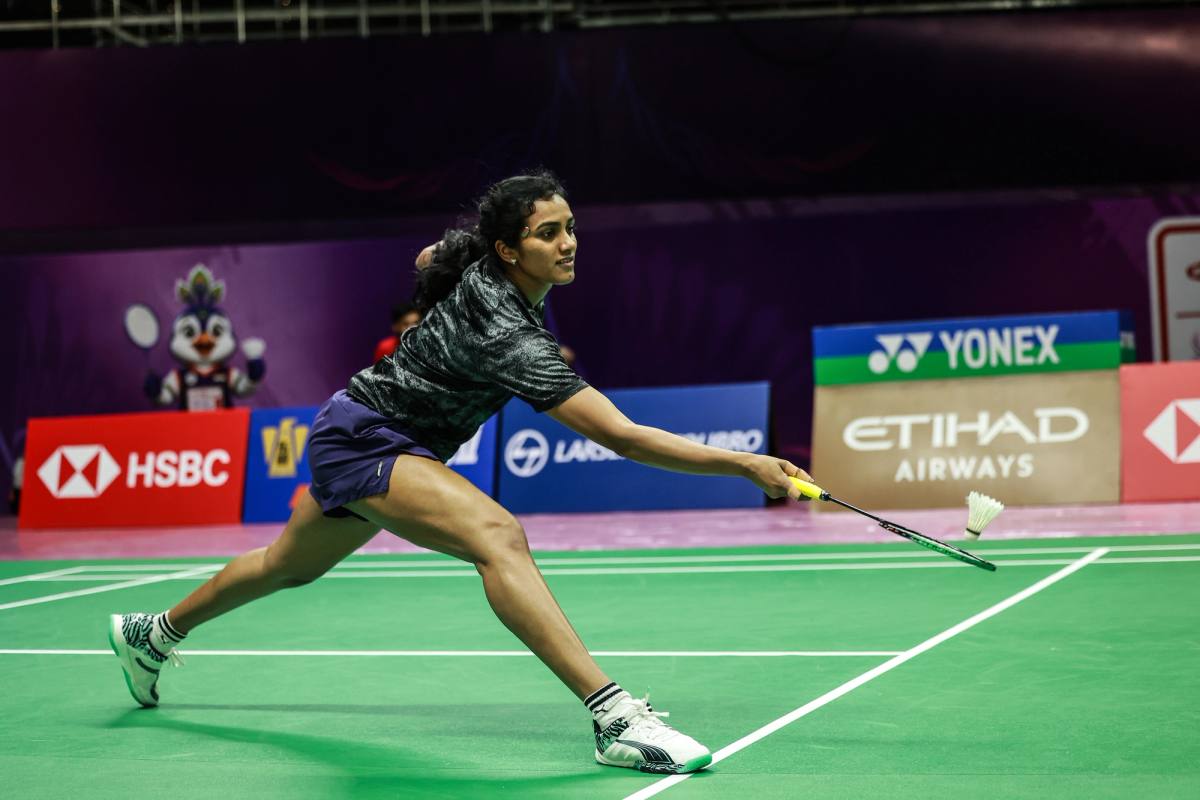
New Delhi has waited 17 years for the World Championships to come back. P. V. Sindhu was a teenager when Hyderabad hosted it in 2009. On Monday evening, she will walk into the first round as the ninth seed, a former world champion and the Indian player most closely watched by a crowd that expects her to make the week matter.
Her opponent, Ireland’s Sophia Noble, is ranked 141st. Sindhu should win. But home World Championships are rarely as simple as a ranking line. The cheers can settle a player; they can also turn routine points into small public tests of nerve. Sindhu knows the tournament’s weight better than almost anyone. She has five World Championships medals, including the 2019 title, and a sixth would make her the most decorated player in the event’s history.
She has spoken recently about still carrying the same competitive urge she felt at 14. That matters more than sentimentality. Sindhu is 31 now, with years of mileage and scrutiny behind her, but her best badminton has always been driven by the ability to turn a long occasion into a private contest of patience and physicality. She does not need to force the match against Noble. She needs to make the court feel long, use her reach, impose the steepness of her attack and allow the pressure to sit on the other side of the net.
The draw gives her a reasonable opening route. If she beats Noble, she would play either Bulgaria’s Stefani Stoeva or Canada’s Wen Yu Zhang, both outside the world’s top 40. The more complicated possibility sits further on, with Wang Zhiyi, the third seed and a recent All England champion, in Sindhu’s quarter of the draw. That is why Monday matters. The first match will not decide Sindhu’s tournament, but it can give the week its first rhythm.
The wider women’s singles draw begins with a question that would have seemed improbable a few weeks ago: how close is An Se Young to her usual self? The Korean is still the No. 1 seed and has compiled a remarkable 38–1 record this season. No player has made the women’s game look more orderly in 2026.
But the margin between dominance and vulnerability can be thinner than a ranking suggests. An has been managing a left-foot issue and said in the pre-tournament press conference that she had improved but was not yet fully free of pain. Her priority, she said, had been recovery and finding her rhythm again after rest in Korea. She begins against Bulgaria’s Kaloyana Nalbantova, a match she will be expected to control. Still, the interest lies in movement. Can she push off hard enough from the back corners? Does she trust the full lunge at the net? Does the foot hold up when the match becomes a series of repeated recoveries?
An has built her advantage on precisely those details. She takes away time through speed, turns defence into attack and drains opponents by making every apparently safe shot come back with interest. The foot does not have to prevent her from winning for it to matter. If it limits her first step, or persuades her to shorten rallies, the draw begins to look different.
Wang’s first-round match against the American Beiwen Zhang offers an early marker. Wang has beaten Zhang in their only recorded meeting and has the stronger 2026 profile, with a 34–9 record and one title. More importantly, she arrives with recent proof that she can beat the world's best player. Her All England victory over An ended a nine-final losing streak against the Korean. That did not make Wang the favourite in New Delhi, but it did turn her into the most credible threat in An’s half.
There is another good match in the first afternoon session. Han Yue, the fifth seed from China, meets Scotland’s Kirsty Gilmour. Han has the more reliable ranking and greater consistency at this level, but Gilmour has arrived with something close to a personal breakthrough after winning the European title in April, following five losing finals. Han’s strength is her ability to extend a rally until the opponent is hitting from the wrong place. Gilmour needs to break that pattern early, use her angles and avoid becoming stuck in a series of defensive lifts.
The evening’s loudest test comes after Sindhu. Shi Yu Qi, the defending men’s world champion and world No. 1, faces Ayush Shetty. Shi leads their head-to-head 3–0 and beat Shetty 21–8, 21–10 in the Badminton Asia Championships final in April. On paper, this is a punishing draw for the Indian.
It is also the match most likely to make the arena listen. Shetty’s attacking intent can create a few dangerous minutes against anyone. Shi, though, is one of the game’s finest managers of tempo. He can take the sting out of an opponent’s first attack, control the front court, and keep making them play the extra shot. Shetty has to channel his aggression. He cannot try to finish every rally. Against Shi, that is usually how the match starts slipping away.
Monday will not produce medals. It will do something more useful. It will show which players have arrived with control, which are still searching for it, and whether New Delhi’s expectation can be carried lightly enough to become an advantage.
PV Sindhu - BAI Images

Keep Reading

The Capacity for Suffering
On the baseline, greatness is written in sweat and split seconds: endure the long rally, find the line under pressure, adapt at match point, and take the next…
US Open: No Sinner, No Certainty in an Open Draw
Jannik Sinner is out, Alexander Zverev is top seed and Carlos Alcaraz returns after four months. Inside the 2026 US Open draw at Flushing Meadows.

US Open: The Crucible at Flushing Meadows
Discover how tennis stars battle grueling injuries and physical strain at the US Open, competing under the electric lights of Flushing Meadows in Queens, NY.