McLaren secure a maiden World Championship for Lando Norris

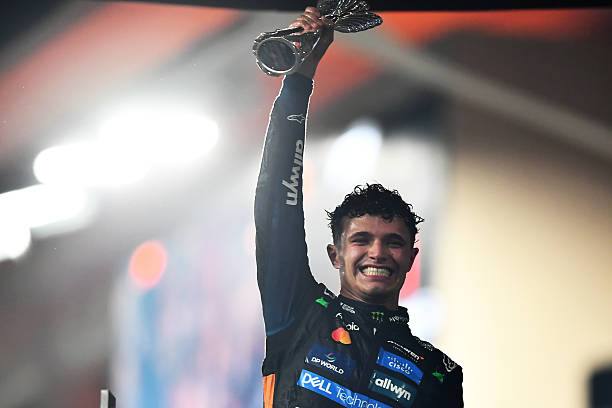
The 2025 Formula One season unfolded as a long, tightening arc, bending slowly away from Max Verstappen’s era and towards a McLaren team that learned how to control an entire championship. Across 24 Grands Prix and six Sprints, Lando Norris gathered 423 points to become Britain’s newest world champion, edging Verstappen by just two points and holding off his own teammate Oscar Piastri, who finished on 410. It was a title built less on runaway dominance than on accumulation, calculation and an alliance between an unusually compliant car and a driver learning to live with pressure rather than fight it.
McLaren’s resurgence framed everything. The MCL39 arrived as a chassis with a wide operating window, especially strong through medium‑ and high‑speed corners, and consistently kind to its tyres. A reworked front suspension, with revised anti‑dive geometry and altered steering link placement, stabilised the car under braking and kept the aerodynamic platform calmer than many of its rivals, which paid dividends late in stints when others faded. The trade‑off was a deficit in straight‑line speed, which turned track position into a form of currency and made McLaren’s race execution and defensive driving central to every Sunday.
The Constructors’ Championship told the structural story behind the drivers’ fight. McLaren locked in back‑to‑back titles and their tenth overall with 833 points, securing the crown with races to spare. Mercedes finished a distant second on 469 points, just ahead of Red Bull on 451, highlighting how skewed Red Bull’s contribution was from Verstappen alone. Norris and Piastri combined for 833 points between them, underlining that both McLaren drivers could contend for wins and podiums, while Verstappen’s 421 points made up the vast majority of Red Bull’s haul.
Red Bull’s RB21 sat at the heart of that imbalance. Verstappen took more wins and poles than any other driver but worked around a car that never quite shook off its balance inconsistencies, veering between oversteer and understeer as conditions shifted. Public comments from Verstappen before and during the year reflected limited confidence that all of the weaknesses from 2024 had been eliminated, and mid‑season technical analysis repeatedly noted a narrow, temperamental operating window compared with McLaren’s package. Verstappen’s own results kept the title alive into Abu Dhabi, but the absence of a consistently scoring second car meant Red Bull could rarely shape races strategically in the way McLaren could with two front‑running entries.
For Norris, the season’s rhythm was defined by consistency. Seven victories and seven poles formed the spine of his campaign, starting with a composed win from pole at a chaotic, mixed‑conditions Australian Grand Prix that announced McLaren’s intent. More decisive, though, was his ability to turn less‑than‑perfect weekends into second and third places, standing on the podium in three‑quarters of the races and avoiding the deep slumps that tested both Piastri and Verstappen at different points. Even as he adjusted early on to a front end that did not always give the feedback he preferred, he edged Piastri 13–11 in qualifying head‑to‑heads, a small but telling margin in a campaign where grid position meant everything.
The season pivoted at Zandvoort. A late power‑unit failure at the Dutch Grand Prix robbed Norris of a likely podium, handing victory and a 34‑point championship lead to Piastri. What looked like a heavy blow turned into an inflection point: with the pressure of defending a lead gone, Norris shifted into a chasing mindset, adopting an attacking but controlled approach over the following rounds. Piastri, carrying the weight of expectation, slid into a six‑race run without a podium, his form dipping especially on low‑grip circuits where Norris adapted more quickly to the MCL39’s quirks.
Behind the wheel, Norris’s campaign leaned on psychology as much as pace. Interviews and paddock analysis through mid‑season highlighted his efforts to moderate his well‑known self‑criticism, keeping debriefs constructive and preventing mistakes from spiralling into loss of confidence. That change showed most clearly in the closing flyaways, where he managed risk rather than chasing every marginal gain, accepting third or second when victory required moves that could jeopardise the wider campaign.
If Zandvoort shifted the mood, Monza changed the maths. At the Italian Grand Prix, McLaren intervened with a team order, switching Piastri and Norris to give their lead driver three extra points. Post‑season modelling made clear how decisive that call was: without the swap, Norris would have finished on 420 points, one behind Verstappen’s 421; with it, he ended on 423 and took the title by two. It was a moment that laid bare the underlying calculus of modern F1: internal rivalry is negotiable, defeating an external threat is not.
Elsewhere, the margins hid in quieter places. In Qatar, a late off‑track moment for Kimi Antonelli opened the door for Norris to gain an extra two points, a small shift that expanded his buffer heading into Abu Dhabi. That cushion meant he needed only a podium in the finale, even if Verstappen won, changing the risk profile of his race and allowing McLaren to prioritise clean air and tyre preservation over aggressive undercuts.
Abu Dhabi compressed the entire year into 58 laps. Verstappen started from pole and controlled the race at the front, while Piastri’s move on Norris on lap one dropped the championship leader to third—the exact position he needed to keep. Through the pit cycles, Norris had to clear traffic and then hold off a Ferrari that hovered close enough to force him into error if he lost concentration, yet not close enough to demand desperate defence. When the chequered flag fell, Verstappen headed Piastri and Norris on the road, but the order was enough: 423 points to 421 to 410, and the first McLaren drivers’ title since Lewis Hamilton in 2008.
Norris became the 11th British world champion and the latest in a line of McLaren title‑winners, while the team’s 833 constructors’ points set a standard for depth and reliability in the current rule set. Piastri left the year with matching wins and more laps led than his teammate, but also a clear sense of where his race‑craft and adaptability must grow. Verstappen, meanwhile, closed a four‑year reign but remained firmly embedded in the title picture, his 421‑point haul and the RB21’s limitations combining into a reminder that in this phase of Formula One, driver brilliance can no longer make up alone for gaps in concept, execution and support.
Lando Norris - Photo by James Sutton - Formula 1/Formula 1 via Getty Images

Keep Reading

The Capacity for Suffering
On the baseline, greatness is written in sweat and split seconds: endure the long rally, find the line under pressure, adapt at match point, and take the next…
US Open: No Sinner, No Certainty in an Open Draw
Jannik Sinner is out, Alexander Zverev is top seed and Carlos Alcaraz returns after four months. Inside the 2026 US Open draw at Flushing Meadows.
US Open: The Crucible at Flushing Meadows
Discover how tennis stars battle grueling injuries and physical strain at the US Open, competing under the electric lights of Flushing Meadows in Queens, NY.