Gijón’s Ghosts: Austria, Algeria and the World Cup Match No One Wants to Win

Winning at a World Cup is supposed to be simple. You take three points, you move on, you celebrate. In this expanded 2026 edition, it often feels anything but. The structure of the group stage and the Round of 32 has created a handful of fixtures where the incentives are bent, if not twisted, and where victory can quietly close one door even as it opens another.
Group J and the problem no one can ignore
Start with Group J. Argentina are already through as group winners with six points, having done the heavy lifting early. Jordan are out, their final game against Messi and company a ceremonial goodbye rather than a competitive event. Austria and Algeria sit on three points each, separated only by goal difference, and meet in Kansas City with one knockout place between them. It is, on the surface, a classic World Cup decider.
Look at the bracket, though, and the picture changes. The winner of Group J plays the runner up of Group H in the Round of 32. The runner up of Group J plays the winner of Group H. Group H contains Spain, who arrived as one of the tournament favourites and have largely played like it. For the second placed side in Group J, the reward for coming through the fire is a probable meeting with Spain straight away. The top team in Group J, by contrast, will likely get Uruguay or Cape Verde instead.
From a distance the incentives are obvious. Finishing second in Group J is not a prize, it is a punishment. The game in Kansas City still matters, because defeat could leave a team marooned in third and anxiously checking the third place standings. But in terms of pure Round of 32 prospects, first place looks far kinder than second. There is something quietly perverse about sitting in a dressing room before a decisive game and feeling that the worst thing that could happen is that you win it by the wrong margin.
The long shadow of Gijón
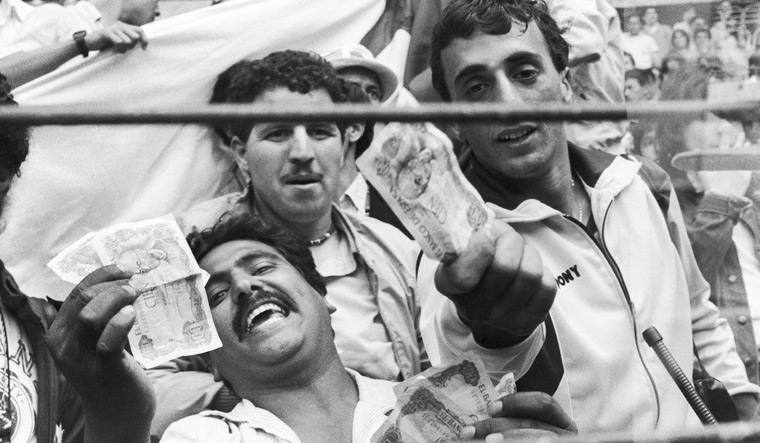
All of this would feel less loaded without the history that sits behind Austria and Algeria. In 1982, Algeria beat West Germany in one of the great World Cup upsets, then went out after West Germany and Austria played a match that suited them both and nobody else. That night in Gijón became infamous. It pushed FIFA into changing the scheduling of final group games and became a case study in what happens when tournament design meets self-interest.
There is no suggestion of anything similar this time. The final round kick-offs are aligned, and the tie-breaking criteria are more complex. Yet the echo is impossible to ignore. You have the same two European nations, Algeria again looking up, and a framework in which certain scorelines and finishing positions begin to look preferable before a ball is kicked. The lesson of 1982 was that you cannot legislate against self-interest if your format invites it.
Other groups, similar tensions
Group J is the most striking example, but it is not the only one. In Group K, Colombia and Portugal reached the final matchday already through. The only question was who would top the group. That question matters in this format, because the group winner is sent towards a third-placed team from another section, while the runner-up is dropped into a tie with a stronger second-placed side. When the options include England or Croatia, as they do in this part of the bracket, the difference between first and second feels less like a nuance and more like a chasm.
The same pattern appears in Group G. Egypt, Iran, and Belgium reached their final round of fixtures separated by narrow margins, but with very different routes depending on where they finished. First place comes with the likelihood of facing a third-placed side. Second brings a meeting with Australia, who emerged solidly from Group D. None of this removes the basic sporting aim of trying to win. It does colour the risk and reward calculation in the background.
Elsewhere, the format has produced more traditional dead rubbers. The United States has already wrapped up its group and knows its next opponent. Germany lost to Ecuador in a game that mattered deeply to the South Americans and very little to the already-qualified European champions. Jordan against Argentina falls into the same category. These fixtures are not morally troubling. They are simply flat, the kind of games that once came late in four-team groups and now come more often.
How the format shapes behaviour
All of this flows from two shifts. The first is the expansion to twelve groups of four, with thirty-two of the forty-eight teams going through. The second is the way those thirty-two are slotted into the bracket. The draw fixes the crosses in advance. Group H winner meets Group J, runner-up. Group J winner meets Group H runner-up. Group K winner meets a third-placed side. Group K runner-up does not. Once you know who is likely to win which group, you can read the risks off the page.
Coaches and analysts are not blind to this. They will have looked at the corridor of potential opponents long before a ball was kicked. Players feel it too. You cannot ask modern footballers, raised on data and scenario planning, to ignore a reality that is printed in the official tournament bracket. At the same time, deviating too far from the instinct to win carries its own danger. Try to game the system, and you can easily end up slipping from second to third, or from safe third to an early flight home.
The result, in practical terms, is a strange new kind of tension. Instead of the old binary of qualify or go out, teams now live in a sliding scale between a good passage and a brutal one. It is a form of structural power that belongs not to the super clubs or the richest federations but to the design of competition itself. For a few hours tonight in Kansas City, the most interesting question in the stadium may not be who goes through, but whether going through in second is a step forward or a step into the fire.

Keep Reading

The Capacity for Suffering
On the baseline, greatness is written in sweat and split seconds: endure the long rally, find the line under pressure, adapt at match point, and take the next…
US Open: No Sinner, No Certainty in an Open Draw
Jannik Sinner is out, Alexander Zverev is top seed and Carlos Alcaraz returns after four months. Inside the 2026 US Open draw at Flushing Meadows.
US Open: The Crucible at Flushing Meadows
Discover how tennis stars battle grueling injuries and physical strain at the US Open, competing under the electric lights of Flushing Meadows in Queens, NY.