Aryna Sabalenka and Jannik Sinner secure rare Sunshine Double

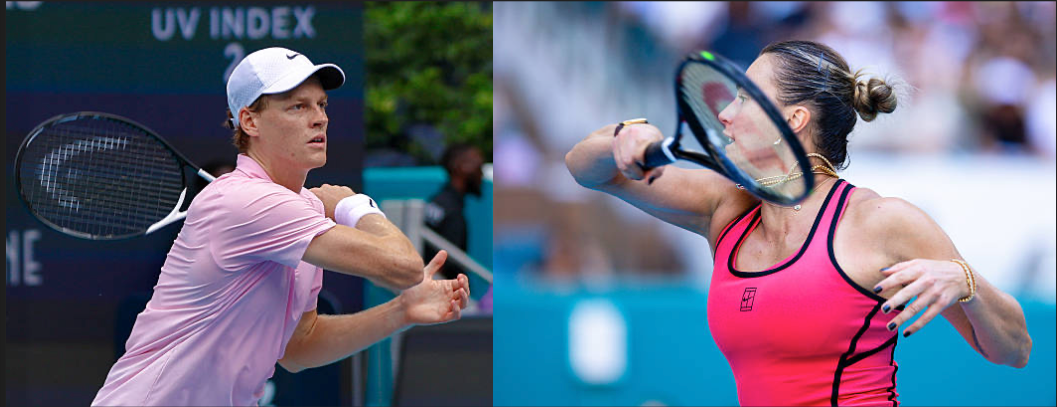
In the shimmering haze of Miami’s Hard Rock Stadium, Jannik Sinner raised the trophy on a Sunday evening, his face etched with quiet exhaustion and something deeper—relief, perhaps, or the weight of legacy settling on his shoulders. A day earlier, Aryna Sabalenka had done the same after outlasting Coco Gauff in a gripping three-set final. Together, they had conquered the Sunshine Double: Indian Wells and Miami in the same calendar year. It is a feat of brutal consistency that has only been achieved four times in tennis history, simultaneously on both tours. This was the fourth. And in that rarity lies a story not of fleeting brilliance, but of the grinding, unglamorous work that separates the great from the immortal.
Eight men and five women have achieved the demanding feat of sustained excellence. But there are only four instances of the double on both sides of the men's and women's draw.
ATP Tour
Jim Courier (1991)
Michael Chang (1992)
Pete Sampras (1994)
Marcelo Rios (1998)
Andre Agassi (2001)
Roger Federer (2005-06)
Novak Djokovic (2011, 2014, 2015, 2016)
Jannik Sinner (2026)
WTA
Steffi Graf (1994, 1996)
Kim Clijsters (2005)
Victoria Azarenka (2016)
Iga Swiatek (2022)
Aryna Sabalenka (2026)
The Sunshine Double is tennis’s quiet marathon. Two elite hard-court events, back-to-back in the calendar’s cruellest window. First comes the desert of Indian Wells—dry heat, high bounce, relentless wind. Then the humid crush of Miami, where the ball sits up, and rallies stretch into marathons. Players fly across the country with barely a day’s rest, bodies aching from seven matches each, minds frayed by the knowledge that one off-day undoes everything. Grand Slams test endurance over two weeks; this demands sustained excellence across four, with no margin for the ordinary. As one champion after another has said, it is often harder than a major because it rewards the invisible: recovery, adaptation, mental steel.
Go back to 1994, the first time both tours aligned in this way. Pete Sampras, the serve-volley king fresh off an Australian Open title, ground out a five-set epic against Petr Korda in the Indian Wells final—4-6, 6-3, 3-6, 6-3, 6-2—then outlasted Andre Agassi in Miami. Steffi Graf, already a force of nature, dismantled Amanda Coetzer 6-0, 6-4 in California before surviving a wobbly first set against Natasha Zvereva in Florida. It was the era of raw power and baseline wars, when Graf’s footwork and Sampras’s serve felt invincible. They weren’t just winning tournaments; they were defining an age of American and German dominance, proving that the desert-to-ocean grind separated pretenders from legends.
A decade later, in 2005, the baton passed to elegance and resilience. Roger Federer, already reimagining the sport with his balletic touch, dispatched Lleyton Hewitt in straight sets at Indian Wells before authoring one of the great comebacks in Miami history—rallying from two sets down against a teenage Rafael Nadal in a five-set thriller that foreshadowed their rivalry. On the women’s side, Kim Clijsters returned from a wrist injury that had sidelined her for nearly a year. Entering as a wildcard ranked outside the top 100, she clawed past Lindsay Davenport in three sets at Indian Wells, then did it again against Maria Sharapova in Miami. Clijsters’s triumph was personal redemption: proof that vulnerability could fuel dominance, that the body could be coaxed back when the will refused to break.
By 2016, the double had become the domain of machines. Novak Djokovic, in the midst of one of the greatest seasons ever, crushed Milos Raonic 6-2, 6-0 in the Indian Wells final and followed with another clinical Miami performance. Victoria Azarenka, rediscovering her fire after injury and personal tumult, stunned Serena Williams in the Indian Wells final and then dispatched Svetlana Kuznetsova in straight sets in Miami. Their parallel runs spoke to an era of physical supremacy and mental fortitude—Djokovic’s return game and Azarenka’s explosive baseline power turning the Sunshine Swing into a statement of sustained excellence amid the sport’s growing depth.
Now, in 2026, Sinner and Sabalenka join that pantheon not as imitators but as worthy heirs. Sinner, the unflappable Italian, claimed his first Indian Wells title with a pair of tiebreak masterclasses against Daniil Medvedev, then swept through Miami without dropping a set all tournament—the first man ever to complete the Double that cleanly. Sabalenka, the Belarusian powerhouse whose game blends raw force with newfound composure, powered past Elena Rybakina before outlasting Gauff 6-2, 4-6, 6-3 in Miami. Her serve and forehand were unrelenting, yet the second-set wobble against Gauff revealed the deeper truth: even the dominant must navigate moments of doubt.
Their paths were different—Sinner’s metronomic precision, Sabalenka’s emotional alchemy—but the outcome was the same: two weeks of flawless adaptation, bodies pushed to the limit, minds anchored by routine and belief.
What binds these four instances of supreme excellence is not just the hardware but the invisible labor. Hours in the gym rebuilding after travel. Late-night physio sessions. The quiet decision, after Indian Wells glory, to treat Miami as a new beginning rather than a victory lap. In an age of packed calendars and endless analysis, the Sunshine Double remains a pure test of character—the willingness to embrace discomfort when the world expects celebration.
Sinner and Sabalenka have etched their names beside Sampras, Graf, Federer, Clijsters, Djokovic, and Azarenka. More than trophies, they have proven that consistency, forged in sweat and doubt, is the rarest currency in sport. The desert sun and Miami humidity do not lie. They reveal who is built for the long haul—and in 2026, the two great champions stood tallest in the light.
Jannik Sinner by Chris Arjoon & Aryna Sabalenka by Mauricio Paiz - Getty Images

Keep Reading
The Capacity for Suffering
On the baseline, greatness is written in sweat and split seconds: endure the long rally, find the line under pressure, adapt at match point, and take the next…
US Open: No Sinner, No Certainty in an Open Draw
Jannik Sinner is out, Alexander Zverev is top seed and Carlos Alcaraz returns after four months. Inside the 2026 US Open draw at Flushing Meadows.
US Open: The Crucible at Flushing Meadows
Discover how tennis stars battle grueling injuries and physical strain at the US Open, competing under the electric lights of Flushing Meadows in Queens, NY.