US Open: Amanda Anisimova discovers redemption on the bold New York stage

Queens hums. The lights bite. The US Open leans into its finish, and the best have raised the bar.
Carlos Alcaraz moved first. And he moved like only he can. Straight sets over Jiri Lehecka. 6–4, 6–2, 6–4. No break points faced. Clean strikes. Clean patterns. The forehand ran ahead of him like a scout. The backhand answered pressure with depth. A third semifinal in four New York runs says enough, but the way he got there says more. He took time away, took the crowd with him, and left Lehecka little to hold. The match never spilled. It only sharpened.
Novak Djokovic answered the noise. He usually does. Taylor Fritz came heavy and loud, stole the third set, and pressed on the return. Djokovic held the line. He took it 6–3, 7–5, 3–6, 6–4. He absorbed. He redirected. He made the court feel small. Fritz had chances. Thirteen break points. Only two converted. That is a familiar story against Djokovic. The margins tightened, then slipped his way, as they so often do. With it, Djokovic moved to 14–0 in US Open quarterfinals. The streak feels unreal. It is also exact.
Now we have the thing the sport keeps asking for. Alcaraz and Djokovic again. Youth and its electricity. Age and its edge. The match that divides rooms and glues them to the screen. The match both men expect and both men fear, a little. It is set for the semifinals. It is the center of gravity.
On the other half, another pulse. Félix Auger-Aliassime found the tight corners of a hard match and refused to blink. He beat Alex de Minaur 4–6, 7–6(9–7), 7–5, 7–6(7–4). It took over four hours. It took patience on the first ball and courage on the second. The Canadian served through nerves, lived on the forehand, and picked the right times to change direction. De Minaur ran all the roads, as he does, but could not open a lane late. Two tiebreaks. Two statements. Auger-Aliassime moves on with swagger earned, not borrowed.
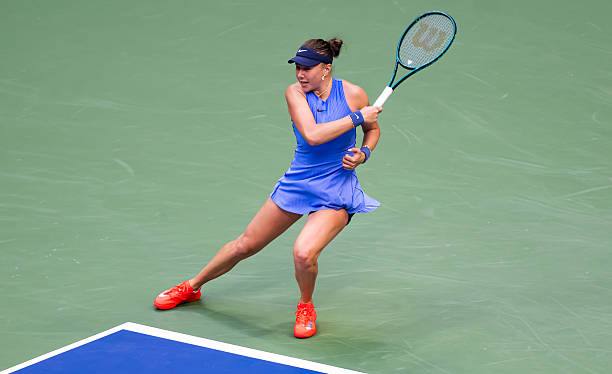
The women wrote their own arc. Amanda Anisimova delivered the shock and the salve. She beat Iga Świątek 6–4, 6–3. Seven weeks after a brutal Wimbledon final loss to the same opponent, she played from the baseline with fire and clarity. Big first strikes. Early takes on the rise. No flinch when the Polish No. 1 dragged rallies long. It was a reset of memory and a reset of the draw. Her first US Open semifinal. On home ground. The moment felt bright and precise. As did the ball.
Jessica Pegula was businesslike. Barbora Krejčíková is never a simple out. Pegula made it look ordered. 6–3, 6–3. She stepped inside the baseline and took the air from the Czech’s patterns. Short backswing. Long through-line. Cross-court backhand used as lever, not just shield. Pegula to another major semifinal, a testament to the week’s discipline and a serve that keeps showing up in the corners.
Aryna Sabalenka advanced too, by walkover after Markéta Vondroušová’s knee injury. It is the least dramatic path through a quarter. It still counts, and it still preserves energy. She brings the heaviest first strike left in the draw. The question is simple. Can anyone hold the line when her first serve lands and the forehand goes flat? Pegula gets the first crack at that riddle.
One quarterfinal remained in motion as the city turned. Karolína Muchová and Naomi Osaka met under the Ashe lights. The ball fizzed. The angles were tight. The result would round out the picture, but the theme was already set: first-strike tennis with nerves of glass, and a premium on second-serve aggression. Check those numbers and you’ll see the truth of the modern game. We live in the land of short points that somehow feel long.
Back to the shots that stayed. Alcaraz’s backhand up the line, struck late and knifed, broke Lehecka’s patterns again and again. His forehand inside-out sealed games before they began. He left the net like a sprinter, not a tourist. There were no dips, only gears. The Spaniard did not just win. He controlled pace, space, and time.
Djokovic’s answers were subtler. The return position that shifts with serve speed. The backhand down the line as a breaker of rhythm, not a flourish. The body serve for holds under stress. He turned 0–30 into calm. He turned long rallies into lessons. Fritz blasted through the third. Djokovic let him, then took the table back. It was the old pattern, yet still impressive: the set-piece points fall his way because he builds them that way.
Anisimova’s win carried a different charge. Not just the upset. The method. She took time early, especially on second-serve returns, and forced Świątek to defend from back foot and back court. The American’s forehand held its line in wind and pressure. The backhand returned cross with bite, then found line when she needed a lever. The score reads simple. The courage did not.
Auger-Aliassime’s finish matters for what comes next. He banked belief in the breakers. He trusted patterns under weight. This is the kind of match that fills a reservoir. The kind you draw from two nights later. If he serves like this again, and if the forehand holds middle before it burns cross, he can make more noise. Queens rewards speed and nerve. He has both right now.
So the climax builds. Alcaraz crackles. Djokovic calculates. Pegula keeps time. Sabalenka stalks. Anisimova breathes new air. The week narrowed, and the tennis got big. New York knows this feeling. The noise rises. The points shrink. The sport distills to first steps and last swings. And to one simple truth. The bravest choices, under the hardest lights, decide everything.
Photo by Robert Prange/Getty Images

Keep Reading
The Capacity for Suffering
On the baseline, greatness is written in sweat and split seconds: endure the long rally, find the line under pressure, adapt at match point, and take the next…
US Open: No Sinner, No Certainty in an Open Draw
Jannik Sinner is out, Alexander Zverev is top seed and Carlos Alcaraz returns after four months. Inside the 2026 US Open draw at Flushing Meadows.
US Open: The Crucible at Flushing Meadows
Discover how tennis stars battle grueling injuries and physical strain at the US Open, competing under the electric lights of Flushing Meadows in Queens, NY.