Two Voices, One Night: Sabalenka and Anisimova light Fireworks inside Arthur Ashe

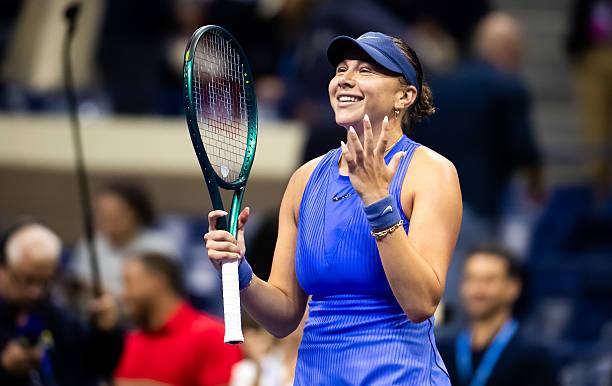
Arthur Ashe hummed. Lights cut sharp. The crowd leaned forward and did not let go.
Aryna Sabalenka bent the match back toward her. She lost the first set to Jessica Pegula. She answered with power and patience. She won 4–6, 6–3, 6–4 to reach a third straight U.S. Open final. The stat line said it plainly: Sabalenka produced 43 winners and eight aces as she turned the tide after a nervy start. She ground the rallies when she had to and blew the points open when she could. That mix carried her through.
Jessica Pegula left everything on court. She opened with the cleaner tennis. The first set belonged to her—few errors, solid depth, tactical discipline. She probed Sabalenka’s backhand and denied the Belarusian the easy angles. But the match swung when Sabalenka found her serve and started to step into the forehand, taking the ball earlier and flattening the court. Pegula fought. She never stopped fighting. She lost, yes. But she also proved why she remains one of the tour’s most relentless competitors.
Across the night, the other semifinal became an argument about power and nerve. Amanda Anisimova rallied from a set down to beat Naomi Osaka 6–7(4), 7–6(3), 6–3. The scoreboard does not capture the sound—nearly three hours of clattering winners, shouted returns, and the slow-burning drama of two hitters who would not yield. Anisimova hit 50 winners to Osaka’s 32. She pushed the pace, refused to be cowed by Osaka’s championship instinct, and broke at 3–1 in the final set to seize the match.
Naomi Osaka came to New York with a comeback tied to courage. She has returned from maternity leave and found her swing again through this fortnight. She took the first set on a tiebreak and stretched the match late into the night, ending close to 1 a.m. She played with real shape and force. In defeat she was not diminished. She said as much afterward—this run would be fuel, not finish. The phrases sounded small in comparison to the tennis, yet they mattered. The tournament had given her back a stage, and she had answered.
Anisimova’s arc is now a headline in motion. Two months after a brutal Wimbledon final defeat, she returned and kept asking for more. She rode her forehand and the first-strike mentality that has defined her rise. She managed tight moments—surviving the second-set breaker, then seizing the key break early in the decider. The result is a second Grand Slam final in three months, and a player who has reshaped the question marks into statements.
Technically, the semis delivered a clinic in contrasting aggression. Sabalenka’s game is first-strike power: heavy serves, angled forehands, and the ability to finish off short balls with brutal force. Her recovery after the opening set was about cleaner serve placement and more calculated aggression—less frenzy, more geometry. Anisimova and Osaka traded in similar currency—flat winners, steep angles, and the occasional moonshot that still found the line; but it was Anisimova who sustained depth and refused the errors at the crucial hinge points.
Emotion lived beside the tennis. Sabalenka knows the route to the final now; she has been here before and understands the pressure of defending and repeating. Anisimova carries something rarer: the rush of rediscovery. Osaka carries the compendium of a champion returning. Pegula carries consistency that will bother many more draws. Each woman left a mark on Arthur Ashe, and each will return to their corners with different truths to unpack.
The final promises a collision of styles. Sabalenka arrives as the favorite. Her power can shorten points and punish depth. Anisimova arrives as the challenger, hungry and swinging with the reckless precision that has undone better nights. It should be loud and it should be close. And whatever happens, Thursday’s semis will remain a night when four players pushed one another to the edges of their games and, in doing so, made the Open more than a tournament—made it a story.
Photo by Robert Prange/Getty Images

Keep Reading
The Capacity for Suffering
On the baseline, greatness is written in sweat and split seconds: endure the long rally, find the line under pressure, adapt at match point, and take the next…
US Open: No Sinner, No Certainty in an Open Draw
Jannik Sinner is out, Alexander Zverev is top seed and Carlos Alcaraz returns after four months. Inside the 2026 US Open draw at Flushing Meadows.
US Open: The Crucible at Flushing Meadows
Discover how tennis stars battle grueling injuries and physical strain at the US Open, competing under the electric lights of Flushing Meadows in Queens, NY.