The Digital Edge: How Global AI Can Lift Indian Sport to World-Class Standards

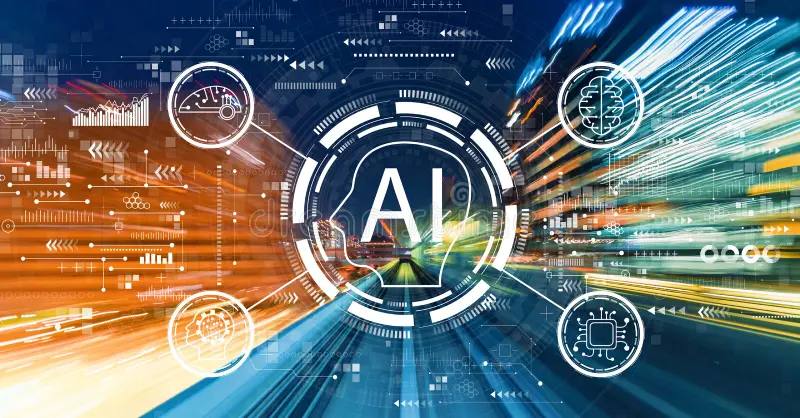
In the high-stakes arena of elite sport, artificial intelligence has shifted from futuristic promise to everyday infrastructure. International programs now treat every heartbeat, footfall, and biomechanical quirk as actionable data, delivering measurable gains in performance, injury prevention, and talent identification. For India—home to 1.4 billion people and an ambitious Olympic Vision 2036—adopting these proven models offers a transformative opportunity to lift standards across the board. By learning from global early adopters, Indian sport can move from intuition-driven coaching to data-driven excellence, turning raw talent into sustained success over the next decade.
International evidence is compelling. In the NFL, nearly 250 tracking devices per game capture 200 data points per play, feeding machine-learning models that optimise strategy and player safety in real time (Jacobs, 2024). European football clubs using Zone7’s AI platform—analysing training loads, biomechanics, and sleep—have slashed injury volumes dramatically: Getafe by 66 per cent in its second season, Liverpool by 30 per cent in days lost, and LAFC by 53 per cent overall (Zhou et al., 2025). A review of AI applications found inertial measurement units combined with gated long short-term memory networks classifying squat technique with 96.3 percent accuracy, while artificial neural networks predicted knee and hip injury risk with error margins under 13 percent using simple insoles and motion capture (Zhou et al., 2025). In gymnastics, Fujitsu’s AI-assisted Judging Support System uses 3D cameras to score routines against a vast database, reducing human bias and delivering near-instant consistency (Walch, 2024). These systems do not replace coaches; they amplify them, turning marginal gains into visible edges.
The benefits cascade across training, recovery, and talent pipelines. AI-driven personalised regimens analyse heart rate variability, workload ratios, and movement patterns to prescribe precise drill volumes and rest windows. In higher-education physical education trials, such systems boosted strength, endurance, and coordination by up to 20 percent while predicting injury risk with 85 percent accuracy through real-time electromyography and gait analysis (Gao, 2025). Recovery shifts from generic protocols to precision medicine: wearables flag overtraining before it becomes downtime. Talent identification, once limited by geography and scouts’ subjective eyes, can now become far more transparent and democratised. Platforms like Australia’s AI scouting tools evaluate junior athletes remotely, while computer-vision systems in the NBA and Australian Rules Football achieve mean average precision scores above 0.94 for player tracking (Zhou et al., 2025; Jacobs, 2024).
India is already laying the groundwork, offering a clear runway for acceleration. The Sports Authority of India’s SPEED AI platform—developed by a NASSCOM Deeptech startup incubated at IIT Bombay—now serves over 6,000 athletes across 14 National Centres of Excellence. It tracks wrist strength for archers, gait changes for runners, postural balance for gymnasts, and even minute dietary details such as lemon-water intake, feeding a centralised Drona dashboard that predicts injuries, recommends diets, and automates skeletal-age verification via the Tanner-Whitehouse 3 method to combat age fraud (Economic Times, 2026). Early results mirror global patterns: joint-angle analysis and acute-to-chronic workload ratios enable pre-emptive interventions, reducing downtime and extending careers. Bengaluru-based Khiladi Pro uses AI-powered video analysis to match thousands of children to their natural sports, measuring the Khiladi Ability Index and providing personalised coaching pathways that address childhood inactivity and obesity (WION, 2025).
Yet grassroots gaps remain stark. Less than 10 percent of Indian academies currently track meaningful performance data, creating a “garbage in, garbage out” problem that AI can solve if scaled thoughtfully (Jio Institute, 2025). In the next decade, India can replicate international successes by integrating these tools at every level. Computer vision, already piloted in Reliance Foundation athletics for load management and predictive biomechanics, could scout talent from remote villages without expensive wearables, thereby feeding a national digital twin database by 2036 (Jio Institute, 2025). Injury prevention alone could save thousands of training days annually, mirroring the 30–66 percent reductions seen abroad. Personalised nutrition and recovery protocols, drawn from Gao’s (2025) 30 percent motivation gains in AI-assisted programs, would nurture longer, healthier careers for India’s young athletes. The global AI sports market, valued at $2.2 billion in 2022, is projected to reach $29.7 billion by 2032; capturing even a modest share would fund widespread adoption (Jacobs, 2024).
Opportunities abound. AI can level the playing field between urban academies and rural talent pools, democratise access to world-class insights, and support India’s Olympic ambitions through evidence-based selection. Fan engagement—real-time tactical analysis, multilingual commentary, personalised highlights—would deepen fan connection to sport. Yet challenges must be confronted head-on: data privacy for biometric streams, algorithmic bias that could favour certain body types, high initial costs that risk widening urban-rural divides, and the urgent need for coaches' and administrators' AI literacy (Zhou et al., 2025; Jio Institute, 2025). Over-reliance on black-box models risks eroding the human coach-athlete bond that turns data into inspiration.
By 2036, Indian sport could reach an inflection point. International programs have shown that AI does not replace sweat, spirit, or strategy—it sharpens them. When SPEED scales to junior levels, when Khiladi Pro’s video assessments reach every district, and when Drona’s predictive dashboards become standard, India will not merely participate on the global stage; it will lead. The next decade belongs to nations that treat AI as a coach on the sidelines—never the one calling the shots, but always the one making every athlete stronger, smarter, and more resilient than yesterday.
References
Economic Times. (2026, February 2). From injury to diet to age verification, how AI is reshaping Indian athletes’ training. https://economictimes.indiatimes.com/news/sports/from-injury-to-diet-to-age-verification-how-ai-is-reshaping-indian-athletes-training/articleshow/127856820.cms
Gao, Y. (2025). The role of artificial intelligence in enhancing sports education and public health in higher education: Innovations in teaching models, evaluation systems, and personalized training. Frontiers in Public Health. https://doi.org/10.3389/fpubh.2025.1554911
Jacobs, B. (2024, November 7). AI in sports: Transforming fan experience and team strategy. American Military University. https://www.amu.apus.edu/area-of-study/health-sciences/resources/ai-in-sports/
Jio Institute Editorial Team. (2025, December 19). The digital athlete: How data and AI are rewriting the rules of Indian sports management. Jio Institute. https://www.jioinstitute.edu.in/news-stories/digital-athlete-how-data-and-ai-are-rewriting-rules-indian-sports-management
Walch, K. (2024, August 16). How AI is revolutionizing professional sports. Forbes. https://www.forbes.com/sites/kathleenwalch/2024/08/16/how-ai-is-revolutionizing-professional-sports/
WION. (2025, September 26). Here’s how AI is helping Indian kids discover their natural sport. Know all about it. https://www.wionews.com/sports/here-s-how-ai-is-helping-indian-kids-discover-their-natural-sport-know-all-about-it-1758897212222
Zhou, D., Keogh, J. W. L., Ma, Y., Tong, R. K. Y., Khan, A. R., & Jennings, N. R. (2025). Artificial intelligence in sport: A narrative review of applications, challenges and future trends. Journal of Sports Sciences. https://doi.org/10.1080/02640414.2025.2518694

Keep Reading
The Capacity for Suffering
On the baseline, greatness is written in sweat and split seconds: endure the long rally, find the line under pressure, adapt at match point, and take the next…
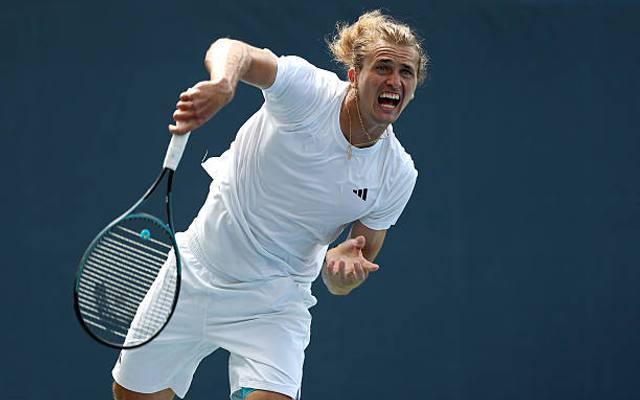
US Open: No Sinner, No Certainty in an Open Draw
Jannik Sinner is out, Alexander Zverev is top seed and Carlos Alcaraz returns after four months. Inside the 2026 US Open draw at Flushing Meadows.
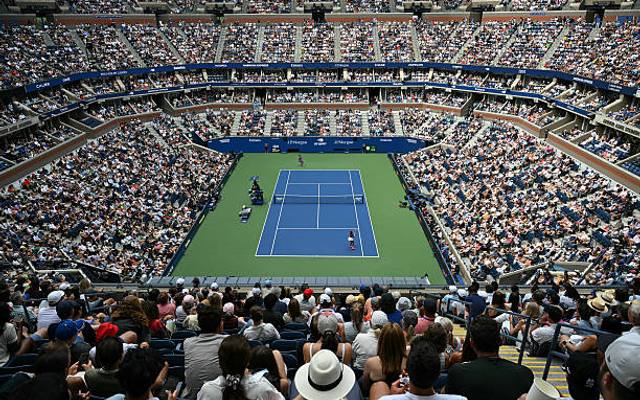
US Open: The Crucible at Flushing Meadows
Discover how tennis stars battle grueling injuries and physical strain at the US Open, competing under the electric lights of Flushing Meadows in Queens, NY.