The Architecture of Anxiety on the PGA Tour

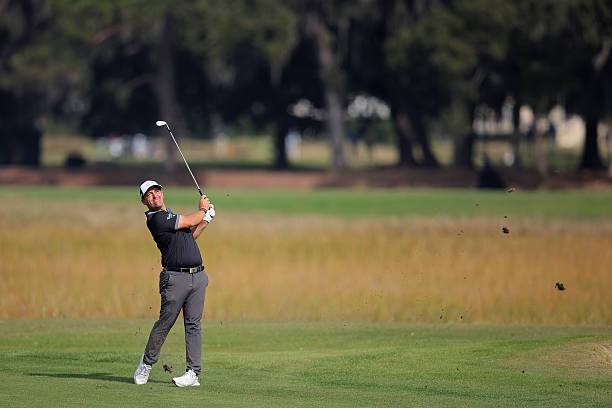
The Sea Island breeze, typically a gentle soundtrack to the final weeks of the competitive year, carried a sharper edge at the conclusion of the RSM Classic. This tournament marked not only the end of the seven-event FedExCup Fall series but also the final, unforgiving cut-off for the 2025 PGA Tour season. For a select group of players, the four days played along the Georgia coastline represented a sudden-death playoff for their professional lives, determining who would enjoy guaranteed status and scheduling freedom in 2026, and who would be condemned to the volatile uncertainty of conditional membership.
This year’s climax was defined by a seismic shift in the competitive architecture. For the first time, the PGA Tour dramatically reduced the threshold for full, exempt playing status from the traditional top 125 players to the top 100. This 25-player reduction was implemented to sharpen the competitive focus of the Tour and concentrate starts among an elite core. While the change was championed as an evolution of the product, its immediate consequence for those professionals ranked 101st and below was the weaponization of the Priority Ranking. The new math instantly amplified the competitive edge of the bubble, transforming a manageable struggle for security into a sudden, career-altering fight for existence.
The purpose of this examination is to explore the competitive and psychological toll exacted by this unforgiving new structure. By combining verifiable facts regarding the 2026 eligibility rules with poignant case studies and statistical forensic analysis, this report details the profound uncertainties facing those who finished just outside the newly defined safety zone. The RSM Classic acted as the final judge, ushering in an era where consistency is prized over sporadic brilliance, and where the line between full status and professional precarity has never been thinner.
The PGA Tour’s revamped structure for 2026 creates a stark operational divide between the 100 players who secured their cards and the 50 who now hold conditional status. Under the old system, a player finishing 125th enjoyed full status, offering ample opportunity and peace of mind. Now, the player finishing 101st faces a reality defined by limited access and scheduling volatility.
The competitive disparity is rooted in the Priority Ranking, which determines event entry based on performance history. For 2026, those outside the Top 100 are categorized into three conditional status tiers, each carrying varying levels of access to Full-Field Events.
Conditional Status Categories (101-150)
The implementation of these tiers means that a player’s final FedExCup Fall ranking determines their likely volume of starts, effectively concentrating scheduling power at the top of the ranking.
Nos. 101-110 (Priority 1): These players secured the strongest conditional status. Tour officials estimated that this cohort could expect to get into approximately 16 of the 19 standard full-field tournaments. While this is a substantial schedule, it is entirely reliant on higher-ranked players opting not to play, creating a constant weekly uncertainty that full status avoids.
Nos. 111-125 (Priority 2): Status in this tier becomes marginal. Access to Full-Field events is severely restricted, dependent on substantial fields not filling or high-ranked players withdrawing. For this group, the schedule will likely pivot heavily toward Opposite Field events, where fields tend to be weaker and prize money lower.
Nos. 126-150 (Priority 3): This cohort holds the lowest access level to standard Tour events. Their competitive schedule will be unpredictable, centered around securing sponsor exemptions and relying heavily on limited playing opportunities. This is the group targeted by the Member Support Program, a financial safety net the Tour instituted.
Shrinking Opportunity
The reduction in fully exempt status is compounded by changes to event field sizes, which directly reduce the total number of competitive opportunities available across the season. Beginning in 2026, the maximum field size for a Full-Field Event will drop from 156 to 144 players, with some events, such as the Sony Open in Hawaii and the Cognizant Classic, shrinking further to 120 players.
This field shrinkage institutionally reduces competitive space, which disproportionately affects conditional players. For events reduced to 120 players, the PGA Tour has entirely eliminated Open Qualifying spots—a reduction of 17 spots across six affected tournaments. Previously, Open Qualifying offered a crucial, meritocratic pathway for conditional players to "play their way in" and gain momentum. The removal of this avenue ensures that competitive access is rigidly dictated by the Priority Ranking, concentrating starts toward the top 100.
The new structure effectively creates two parallel tiers of competition: the elite events (Signature Events, Majors) focused on the Top 50, and the standard Full-Field events where players 51-100 face less weekly pressure than their conditional counterparts (101-110). A player ranked 101st must succeed in nearly every start to climb the ranking, whereas a player at 99th can schedule with relative impunity. This disparity means the competitive squeeze is far more intense on the conditional group, generating a pressure feedback loop that punishes inconsistency and rewards players already enjoying success.
The Sea Island Climax
The RSM Classic served as the culminating event of the FedExCup Fall, establishing the final standings that determine the security of every player’s 2026 season. The tournament concluded with Sami Välimäki of Finland securing his maiden Tour victory, earning a two-year exemption and spots in the first two Signature Events of 2026. While Välimäki's win guaranteed his future, the drama centered squarely on those attempting to cling to the 100th spot.
The final outcome delivered a painful lesson in the brutal insufficiency of excellence. Karl Vilips secured the final spot for full exemption, finishing precisely 100th in the FedExCup Standings.1 Vilips’ survival was primarily secured by an earlier victory at the Puerto Rico Open 10, illustrating how a single high-value performance can provide the necessary buffer to withstand late-season turbulence.
The player immediately outside the safety zone, occupying the 101st position, was Lee Hodges. The competitive irony here is profound: Hodges delivered an exceptional performance at the RSM Classic, tying for fourth place.1 In almost any other week, a top-five finish would guarantee advancement or security. However, due to his cumulative deficit earlier in the season, and the overall quality of play in the final event, his stellar closing performance was ultimately insufficient to dislodge Vilips and climb into the 100th spot.
Hodges’ fate highlights a crucial shift in competitive dynamics: the Top 100 cut-off prioritizes season-long consistency above late-season heroics. A high finish in the final tournament provides FedExCup points, but if the points accrued over the 2025 season were too low, even a top-five performance in the Fall will only land a player conditional status. Hodges, despite his late push, now finds himself in the most advantageous conditional category (101-110), but crucially, he lacks the guaranteed scheduling power that 100th place provides. His 2026 season will be defined by constant checking of the entry list, waiting for the withdrawals necessary to grant him a start.
The Weight of Uncertainty
The purest representation of the competitive and emotional cost of the new structure is found in the story of Justin Lower. Entering the RSM Classic ranked 114th, Lower needed a high finish to leapfrog competitors and find safety within the shrinking bubble. Instead, he missed the cut, confirming the loss of his full PGA Tour status.
Lower’s post-round comments were raw, honest, and profoundly reflective of the pressure cooker environment of the FedExCup Fall. He admitted to being "pretty p***ed off," confessing that he did not know what the future holds for him.13 His anxiety was compounded by immense personal stakes: "My life is about to change dramatically in about like three, four months. I have twins on the way. I have no idea what to expect". The professional insecurity of losing his card now collides with the responsibility of impending fatherhood, amplifying the distress.
While acknowledging his need to improve ("I obviously had a s***ty year"), Lower also voiced palpable frustration with the Tour’s structural changes, noting that he felt "threatened by that". This internal conflict—the anger directed at the shrinking competitive landscape juxtaposed with the painful self-awareness of poor performance—is central to the bubble player experience. A player can work relentlessly ("I worked my ass off this fall") but if the performance deficit is too large, the margin for error offered by the new structure is simply too small to allow for correction.
The Statistical Truth: Forensic Analysis of Failure
The emotional fallout is statistically justifiable. A forensic analysis of Lower’s Strokes Gained data provides the clinical explanation for his inability to survive the Top 100 cut, confirming that his game profile was mathematically insufficient for sustained Tour status.
Lower finished the season ranked 155th in Strokes Gained: Total, averaging a loss of $0.473$ strokes to the field per round. This rate confirms that, even under the previous Top 125 system, he was operating at a competitive deficit. To survive the rigorous demands of the Top 100, a player cannot consistently lose strokes to the field.
His performance profile revealed critical short game deficiencies. Lower ranked 160th in Strokes Gained: Around the Green, losing $0.249$ strokes per round. This severe inability to save par after missing a green consistently applied pressure to his scoring throughout the year, leading directly to a high frequency of missed cuts (e.g., missing the cut in seven of his last ten pre-RSM tournaments). Furthermore, his Strokes Gained: Approach the Green ranked 114th, indicating inconsistent iron play.
The correlation between these objective statistics and Lower’s subjective emotional state confirms a critical principle of the modern PGA Tour: the symbiotic relationship between analytics and anxiety. His raw anger is the human reaction to a statistical reality that his overall game was simply not robust enough to secure the limited space available in the new Tour structure. The new system does not create the weakness, but rather exposes and punishes it with far greater severity than before.
The impact of the new Top 100 architecture extends beyond players fighting for their initial foothold; it has fundamentally reorganized the relationship between the Tour and its seasoned veterans. Multi-time winners like Matt Kuchar and Joel Dahmen, who would have easily retained full status under the previous rules, now face a future defined by limited schedules and the harsh reality of conditional membership.
Matt Kuchar, a nine-time PGA Tour winner and a fixture on leaderboards for nearly two decades, finished the season 118th in the FedExCup Standings.6 After 19 consecutive seasons on Tour, Kuchar lost his full card. This outcome forces the 47-year-old to consider utilizing one of his two available exemptions for career money.
Kuchar’s Exemption Dilemma
The crucial insight here is the devaluation of traditional status benchmarks. Kuchar, ranked 15th in career earnings at over $61 million 6, should logically leverage his longevity for security. However, the Tour’s new configuration has bifurcated status: 'Elite Status,' which grants access to the high-purse Signature Events, and 'Working Status,' which focuses only on standard Full-Field events.
Kuchar confirmed the critical limitation of the system: using his career money exemption will not grant him entry into any of the eight Signature Events or The Players Championship.6 He stated plainly, “It’s not going to get you into any elevated events.” This structural design ensures that the Tour’s highest-value tournaments are exclusively reserved for recent, high-level performance (Top 50) or current-year winners.
For Kuchar, the decision is complicated: does his conditional status at No. 118 in the Priority Ranking offer a comparable number of full-field starts as the career money exemption? If the access is similar, he might defer using the exemption to a later date, as he remains well ahead of the 25th player in career earnings.6 Regardless of the decision, the principle remains: an established career exemption is now insufficient to access the highest tier of competition, prioritizing current performance over historical achievement.
Joel Dahmen’s Crossroads
Joel Dahmen, a popular player and past winner who finished 122nd, also lost his full status after missing the cut at the RSM Classic. Dahmen’s situation is slightly less dire than players outside the top 125, but his path back to full status must rely on maximizing his limited conditional starts and successfully converting sponsor exemptions provided due to his status as a past champion and fan favorite.
The fate of Kuchar and Dahmen demonstrates that the Top 100 cut-off is a mechanism for competitive culling, regardless of popularity or past success. The message delivered is clear: continuous, statistically viable performance is the only currency that guarantees a spot at the Tour’s most lucrative events.
In tandem with the tightening of competitive entry, the PGA Tour has recognized the enhanced volatility caused by the Top 100 cut and reduced field sizes. Consequently, the Tour has introduced new financial support programs designed to mitigate career devastation and secure player loyalty to the PGA ecosystem.
The most significant initiative is the Member Support Program (MSP). This program awards $150,000 in earning assurance to exempt players ranked 126th and beyond in the FedExCup standings. This financial floor guarantees a player who competes in a minimum of 12 events (a combination of PGA Tour and Korn Ferry Tour starts) a base salary of $150,000 for the season. If the player’s earnings fall short of that total, the program makes up the difference.
This assurance serves a dual purpose. It acknowledges the volatile nature of professional golf and acts as a financial safety net for players who fall off full status. Critically, it encourages players to remain within the PGA Tour structure (including the Korn Ferry Tour, where those who lose PGA Tour eligibility automatically receive exempt status) rather than seeking alternative, competing professional tours. The Tour is effectively trading competitive access for financial loyalty.
The Road to Redemption
For players who lost their card, the immediate route to redemption is the PGA Tour Q-School Final Stage, which immediately follows the RSM Classic. This remains the most direct competitive path to regain full status or improve conditional priority.
The structure of Q-School ensures that highly ranked players who missed the cut still have an avenue back: the top 40 available applicants who finished below 100th (down to 200th position) on the final FedExCup Fall points list qualify for the Final Stage. The highest reward is reserved for the top five finishers at Q-School, who will earn a PGA Tour card for 2026, offering players like Justin Lower an immediate chance to leapfrog from conditional status back to the fully exempt tier.
This final competitive gateway demonstrates that while the PGA Tour is making entry into the top tier more exclusive, it is also providing clear, structured pathways for those who momentarily fail to maintain their status, rewarding strong performers and supporting those returning from the PGA Tour.
The conclusion of the FedExCup Fall and the dramatic finality of the RSM Classic underscore a fundamental truth about the highest level of professional golf: the margin for error is nonexistent. The reduction of fully exempt cards to 100 ensures that success is no longer defined merely by sporadic brilliance—such as Justin Lower’s flashes of top-five finishes or Lee Hodges’ clutch T4 at Sea Island—but by ruthless, season-long statistical consistency. The loss of full status for players like Kuchar and Dahmen, who possessed the competitive security of past winners, validates the new structure’s prioritization of current form over career legacy.
For the cohort ranked 101st through 125th, the 2026 season will be defined by an exhausting, constant grind. Their competitive fate rests on maintaining their competitive edge while enduring the scheduling uncertainties of conditional status. Every missed cut, every low finish, will be magnified, placing immense psychological stress on players who must consistently perform under the threat of relegation.
The Tour has provided financial reassurance through the Member Support Program, recognizing the intense pressure it has created. Yet, no amount of financial cushion can replace the competitive security of a guaranteed schedule. The ultimate lesson gleaned from Sea Island is that golf at this level demands absolute statistical viability. For those whose performance profile ranks outside the top 150 in critical metrics like Strokes Gained: Total, the new PGA Tour structure offers no forgiveness. Their future now hinges on utilizing conditional starts, securing exemptions, or immediately succeeding at the Final Stage of Q-School—a grueling path that begins the moment the sun sets on the competitive year. The thin line that separates opportunity and dismissal, and the struggle for survival, though quieter than the Signature Events, is far more visceral and profound.
Justin Lower - Photo by Jonathan Bachman/Getty Images

Keep Reading

The Capacity for Suffering
On the baseline, greatness is written in sweat and split seconds: endure the long rally, find the line under pressure, adapt at match point, and take the next…
US Open: No Sinner, No Certainty in an Open Draw
Jannik Sinner is out, Alexander Zverev is top seed and Carlos Alcaraz returns after four months. Inside the 2026 US Open draw at Flushing Meadows.
US Open: The Crucible at Flushing Meadows
Discover how tennis stars battle grueling injuries and physical strain at the US Open, competing under the electric lights of Flushing Meadows in Queens, NY.