Satwik and Chirag secure second straight silver

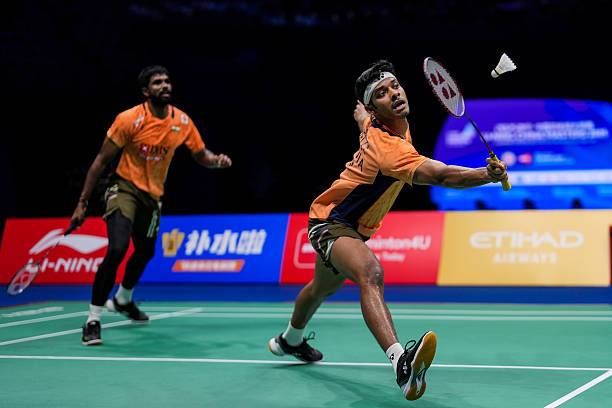
In the electrifying cauldron of Shenzhen Arena, where the air hummed with the sharp cracks of shuttlecocks and the roar of a partisan crowd, the men's doubles final of the China Masters unfolded like a high-stakes chess match played at breakneck speed. On one side, the world No. 1 South Korean duo of Kim Won-ho and Seo Seung-jae—reigning world champions and Olympic silver medalists—brought their signature blend of surgical precision and unyielding pace. On the other, India's dynamic pair of Satwiksairaj Rankireddy and Chirag Shetty, seeded eighth but riding a wave of resurgence, channeled their trademark aggression and tactical evolution in a bid to claim their first title of the year.
The final was a tightly contested 45-minute masterclass in badminton's bristling beauty: a 21-19, 21-15 victory for the Koreans that extended the Indians' wait for silverware but underscored their unmistakeable comeback story. Plagued by injuries earlier in the season that had plummeted them to world No. 27, the duo had clawed their way back to No. 7 by September, thanks to a bronze at the World Championships and a runner-up finish at the Hong Kong Open.
In Shenzhen, they dismantled formidable foes en route to the final: a gritty 21-17, 21-14 semifinal win over Malaysia's Aaron Chia and Soh Wooi Yik—nemeses they had also toppled at the Worlds—and a quarterfinal upset against China's rising stars Liang Weikeng and Wang Chang. These victories weren't just wins; they were statements of transformation. "We've been working on our defense and variations," Shetty had hinted post-semifinal, a nod to the fitter physiques and sharper mental edges that replaced the flat-footed vulnerabilities exposed during their Paris Olympics quarterfinal exit.
The final ignited with fireworks. Satwik and Chirag stormed to a commanding 14-7 lead in the opening game, their explosive smashes and Chirag's pinpoint net play forcing errors from the Koreans. The Indians' improved point construction—mixing flat drives with deceptive drops—had the crowd on edge, as Shetty orchestrated rallies with the poise of a conductor. But Seo and Kim, ever the tacticians, flipped the script.
Drawing on Seo's pace and pedigree, they unleashed a barrage of six consecutive points, extending rallies and baiting unforced errors with their low, flat trajectories. The score teetered on the edge at 19-19, hearts pounding, before two back-to-back Indian lapses—a wide smash from Satwik and a net cord that betrayed Shetty—handed the first game to the Koreans.
Momentum, that fickle badminton phantom, swung decisively in the second. Tied 11-11 at the interval, Kim and Seo surged with four straight points, their seamless rotations and Seo's uncanny anticipation suffocating the Indians' attacks. Satwik's booming serves faltered under pressure, and despite valiant digs—Chirag's diving saves drawing gasps—the duo couldn't summon a Plan B. The final scoreline belied the tension: 21-15, sealing a straight-games triumph for the top seeds and their second title of the season.
For Satwik and Chirag, it was déjà vu—their second straight runner-up finish after Hong Kong—but far from despair. As Shetty reflected in a post-match huddle, "We're closer than ever—we just need that one breakthrough moment." Meanwhile, Kim and Seo etched another chapter in their dominance, their victory a testament to consistency and class.
Photo by Shi Tang/Getty Images

Keep Reading
The Capacity for Suffering
On the baseline, greatness is written in sweat and split seconds: endure the long rally, find the line under pressure, adapt at match point, and take the next…
US Open: No Sinner, No Certainty in an Open Draw
Jannik Sinner is out, Alexander Zverev is top seed and Carlos Alcaraz returns after four months. Inside the 2026 US Open draw at Flushing Meadows.
US Open: The Crucible at Flushing Meadows
Discover how tennis stars battle grueling injuries and physical strain at the US Open, competing under the electric lights of Flushing Meadows in Queens, NY.