Rory McIlroy scrambles to defend his Masters title

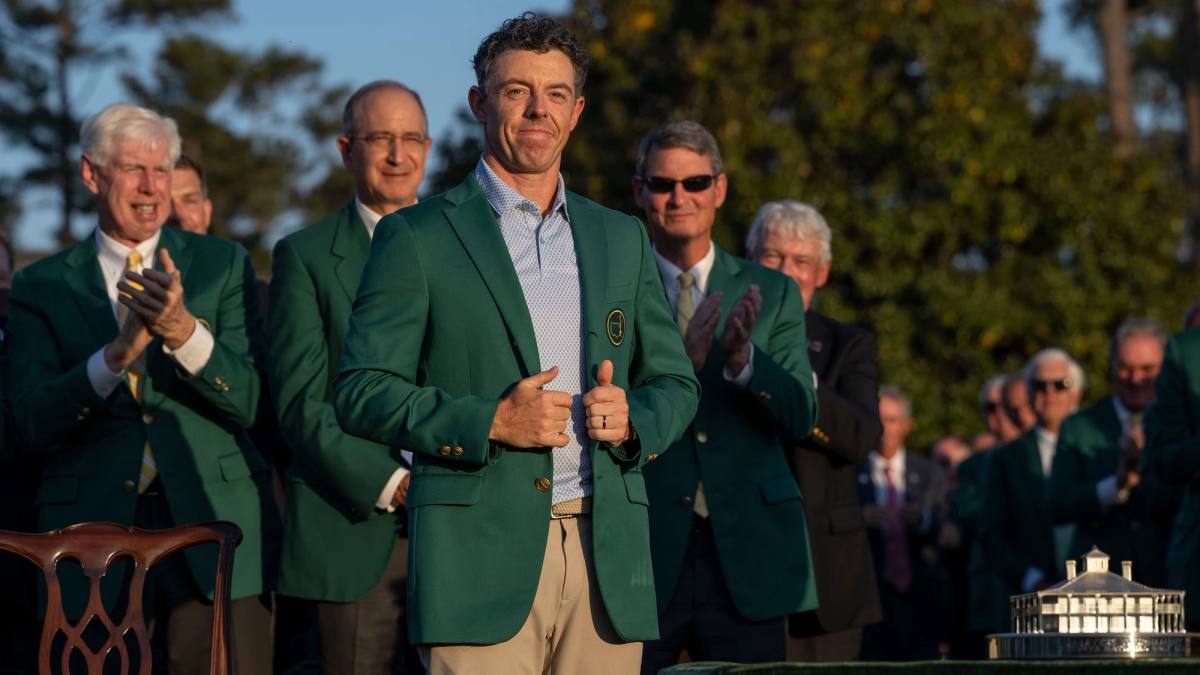
Rory McIlroy’s defense of the Masters green jacket was not a coronation but a quiet siege, fought in the slanting light of a hot Georgia afternoon where every gust carried the weight of history. On Sunday, at Augusta National, he closed with a one-under 71 to finish at 12-under 276, one stroke clear of Scottie Scheffler. It was the 90th Masters, and McIlroy became only the fourth man to win consecutive titles here—joining Jack Nicklaus (1966), Nick Faldo (1990), and Tiger Woods. The first repeat champion since Woods in 2002, he had waited seventeen years for his first jacket in 2025. Now he has two, the perseverance of a decade and a half distilled into a single, sun-baked Sunday.
He arrived at the first tee on Saturday, with a record six-shot lead, forged by a Friday 65 that featured nine birdies and left the field gasping. By the end of a melancholic round, he conceded all of that margin back; he found water at the 11th and fought an errant driver all week. He began the final round tied at 11-under with Cameron Young. The front nine tested him immediately. A double bogey on the fourth, and another bogey at six, dropped him to nine-under. Through a grimace, he saw his competitors closing around him. Justin Rose and Young took centrestage, while Henley and Hatton caught a scent of opportunity.
McIlroy refused to surrender.The turn came at the seventh. A crisp birdie returned him to double digits under par. The par-five eighth yielded another, pulling him within one. Then came Amen Corner, that sun-dappled gauntlet of pine and water where Augusta reveals its true temper. At the 11th he lagged a six-footer for par, the ball tracking true, the sort of quiet save that separates repeat champions from one-hit wonders. On the 12th, wind swirling at the treacherous hollow, he backed off once, watched caddie Harry Diamond toss grass skyward, then pulled a 9-iron he had grooved on the range the night before. The shot was a sawed-off fade, aimed deliberately at the bunker’s heart, drifting right on the breeze to settle seven feet from the pin—the closest approach of the entire final round among 53 players. Patrons doffed their hats in silent salute. Birdie. On the 13th he threaded an 8-iron to the back fringe, avoiding the water that sank his spirit the previous year, and rolled in another birdie. Two shots clear through the corner. The defense had found its rhythm.
The back nine tested the margins, it always does.
A wind-knocked wedge at 15 dropped short on the green; he saved par. At the 16th, he baked his tee shot black, sailing into the swale on the far side of the green. Opting to putt, he knocked the ball into the contours of the green, driving it to the flag on a near perpendicular, tapping for par and protecting his two shot cushion.
At 17 he pushed his approach right, chipped delicately, and holed the par putt that kept him ahead. Then the 18th, the closing hole that pushed him into a playoff last year. This time the drive sailed into the right-hand trees, around the left edge of the 10th fairway. He punched forward into the greenside bunker, splashed out to twelve feet, and two-putted for bogey.
Scheffler had birdied 15 and 16 to reach 11-under and watched his 17th-hole birdie putt kiss the edge of the cup. McIlroy’s tap-in was not theatrical; it was the quiet punctuation of a man who had done the bulk of his work on Thursday and Friday and simply refused to let the weekend unravel. He raised his arms, and let out a roar of relief, echoing like thunder through the pines.
In the Butler Cabin he told CBS, “I can’t believe that I waited 17 years to get one green jacket, and I get two in a row.” The words carried no bravado, only the exhausted gratitude of a player who had studied every contour of Augusta’s undulating greens and learned, finally, how to breathe under the pressure. “It was a tough weekend,” he said. “I did the bulk of my work on Thursday and Friday, but just so happy to hang in there and get the job done.”
There is an aesthetic to this defense that transcends statistics. McIlroy’s golf has always possessed a lyrical violence - long, drawing drives and irons that seem to bend the air - but Sunday was about restraint. The 9-iron at 12 was not power; it was precision calibrated to the gust. The par saves at 11 and 17 were not miracles; they were the product of a mind trained by psychologist Bob Rotella to inhabit a private bubble, to let the teenage sneeze on the 13th tee pass without breaking routine. He paced the fairways with the deliberate stride of experience, no longer the bounding 21-year-old of 2011 but a man who had internalized the cost of every near-miss.
The patrons sensed it. Their applause at the 12th tee was not mere adulation; it was recognition that they were watching a champion defend his realm with the same grace Augusta’s azaleas lend to the landscape.
In joining Nicklaus, Faldo, and Woods, McIlroy did more than add a name to an elite roster. He closed the loop on his own narrative at the one major that had eluded him the longest. Six majors now, level with Faldo among Europeans in the modern era. Yet the numbers feel incidental beside the image of him standing in the fairway at 13, choosing calm over haste. That patience, earned through years of final-round collapses and persistent heartbreak, turned a defense into something rarer: a feat of aesthetic economy, where the difficult was made to look inevitable.
As the sun dipped behind the pines and the jacket was draped across his shoulders once more, McIlroy had not merely repeated; he had refined the art of winning here. The azaleas will bloom again next April. So, too, will the question of whether any man can three-peat. But for one luminous afternoon in 2026, Rory McIlroy reminded us why Augusta remains the ultimate stage for a champion’s second act: because true defense is never repetition. It is reinvention under the eyes of history, executed with the quiet ferocity of a man who finally knows the course as well as it knows him.

Keep Reading

The Capacity for Suffering
On the baseline, greatness is written in sweat and split seconds: endure the long rally, find the line under pressure, adapt at match point, and take the next…
US Open: No Sinner, No Certainty in an Open Draw
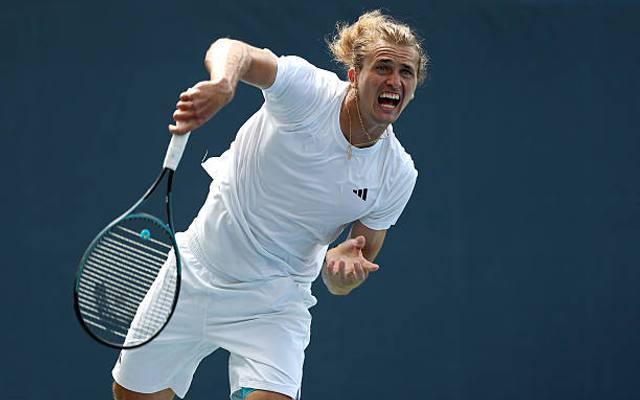
Jannik Sinner is out, Alexander Zverev is top seed and Carlos Alcaraz returns after four months. Inside the 2026 US Open draw at Flushing Meadows.
US Open: The Crucible at Flushing Meadows
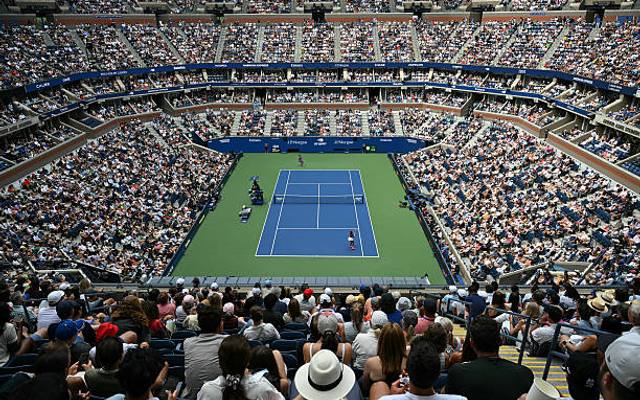
Discover how tennis stars battle grueling injuries and physical strain at the US Open, competing under the electric lights of Flushing Meadows in Queens, NY.