India magnify the chasm between teams demolishing UAE in Asia Cup

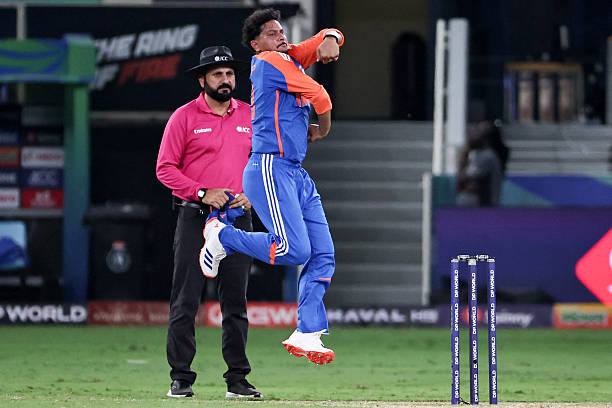
The Asian Cricket Conundrum: When Mismatches Hurt the Beautiful Game
India's comprehensive dismantling of the UAE in the Asia Cup 2025 opener—bowling them out for 57 before chasing down the target in just 4.3 overs—was a spectacle that left cricket purists deeply uncomfortable. While Kuldeep Yadav's four-wicket haul and Shivam Dube's three-wicket burst showcased individual brilliance, the match itself exposed a troubling reality that international cricket can no longer ignore: the growing chasm between elite and associate nations is alienating fans and undermining the sport's global aspirations.
The statistics tell a damning story. UAE's total of 57 was their lowest-ever in Asia Cup T20 competition, with their last eight wickets falling for a mere 10 runs after a promising start of 47 for 2. India's chase lasted just 17 minutes of actual playing time, with Abhishek Sharma striking 30 off 16 balls before perishing in what amounted to little more than net practice. ESPN Cricinfo noted that barring rain-affected matches, the 106 balls needed represented India's shortest T20I ever.
The mismatch mirrors recent blowouts involving other cricket powerhouses. Afghanistan's comprehensive 94-run victory over Hong Kong in the Asia Cup 2025 opener exemplified similar disparities, where the Afghans posted 188 for 6 before restricting Hong Kong to just 94-9 in 20 overs, with Azmatullah Omarzai's explosive 21-ball fifty and Sediqullah Atal's unbeaten 73 highlighting the gulf in class. Pakistan's crushing 155-run victory over Hong Kong in the Asia Cup 2022 exemplified similar disparities, where Pakistan posted 193 for 2 in 20 overs before bowling out Hong Kong for a record-low 38 in just 10.4 overs—the lowest total by any team against a Full Member nation in T20 internationals, with Shadab Khan taking 4-8 and Mohammad Nawaz claiming 3-5.
Similarly, Australia's 309-run demolition of the Netherlands in the 2023 World Cup, where they posted 399 before restricting their opponents to 90, highlighted the vast gulf in resources and experience between full members and associates.
These mismatches represent more than mere statistical anomalies—they constitute a fundamental threat to cricket's credibility as a global sport. UAE coach Lalchand Rajput's admission that his players were "overawed by India's big names" and were "playing against this quality of spin for the first time" reveals the experiential deficit that no amount of domestic preparation can bridge. When professional cricketers appear overwhelmed by conditions and opponents they rarely encounter, the contest becomes exhibition rather than competition.
The broader implications extend beyond individual matches. Cricket's growth strategy relies heavily on competitive balance to maintain audience engagement across diverse markets. When tournaments feature predictable outcomes where powerhouses steamroll minnows, casual fans—particularly in emerging markets—lose interest rapidly. Television viewership plummets during lopsided contests, sponsors question their investments, and the sport's commercial ecosystem suffers. The ICC's expansion agenda, designed to globalize cricket through increased participation, inadvertently creates more mismatches that damage the product's quality.
Moreover, these blowouts provide limited developmental value for either side. Associate nations gain little from being dismissed in under 14 overs, while established teams risk complacency and poor habits against inferior opposition. India's bowlers, despite impressive figures, learned nothing about their craft against batsmen who had never faced quality spin bowling, while UAE's players returned home demoralized rather than educated.
The solution requires structural reform rather than cosmetic fixes. Cricket needs proper tiered competitions where teams face opponents of similar standard, meaningful development programs that address skill gaps systematically, and perhaps most importantly, reduced frequency of mismatches in marquee tournaments. The current system, where commercial considerations often trump competitive balance, serves neither the sport's development nor its entertainment value.
Until cricket's governing bodies acknowledge that lopsided contests diminish rather than enhance the sport's appeal, matches like India versus UAE will continue to provide hollow spectacle while driving away the very audiences cricket desperately needs to cultivate. The beautiful game deserves better than 4.3-over exhibitions masquerading as international competition.
Photo by FADEL SENNA/AFP via Getty Images

Keep Reading

The Capacity for Suffering
On the baseline, greatness is written in sweat and split seconds: endure the long rally, find the line under pressure, adapt at match point, and take the next…
US Open: No Sinner, No Certainty in an Open Draw
Jannik Sinner is out, Alexander Zverev is top seed and Carlos Alcaraz returns after four months. Inside the 2026 US Open draw at Flushing Meadows.
US Open: The Crucible at Flushing Meadows
Discover how tennis stars battle grueling injuries and physical strain at the US Open, competing under the electric lights of Flushing Meadows in Queens, NY.