Brooks Koepka leaves LIV Golf stranded at a complicated crossroads

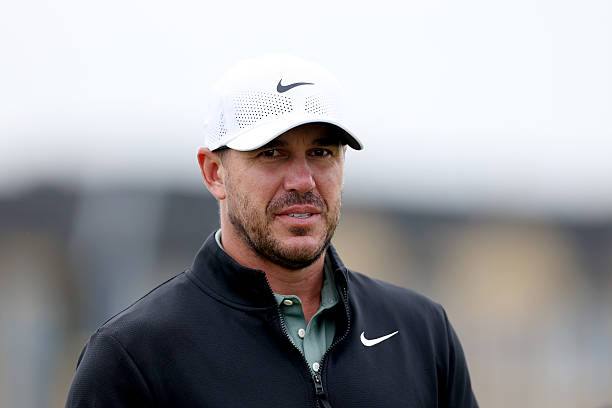
There is a jagged irony in seeing a league christened for the Roman numeral 54 discard its signature three-round identity. Launching its 2026 season next month, the Saudi-backed experiment has retreated into the very format it once mocked: a traditional four-day tour desperate for institutional grace. The pivot, however, was only the prelude. The real earthquake struck December 23, when Brooks Koepka walked away—the first genuine reverse defection in LIV's four-year saga. This wasn't a fringe player chasing status, but the five-time major champion who served as the circuit’s ultimate competitive anchor since jumping in June 2022.
The metamorphosis of LIV Golf from a "disruptor" to a traditionalist-aligned entity represents more than just a change in the number of holes played; it signifies a fundamental reassessment of the league’s long-term viability within the global golf ecosystem. For three years, the "54" moniker was a badge of rebellion, a symbol of a faster, louder, and more condensed version of the sport. However, as the 2026 season approaches, the pressure of the Official World Golf Ranking (OWGR) and the necessity of providing a rigorous competitive platform for its elite players has forced a retreat to the 72-hole standard. This shift occurs against the backdrop of the most significant roster crisis in the league’s short history: the loss of its most credible champion.
The Koepka Fracture
Koepka wasn't just another signing. He was LIV's proof of concept—the first active major champion to defect, and the first to prove a LIV player could still conquer golf's highest peaks when he won the 2023 PGA Championship. His decision to exit with one year remaining on a contract reportedly worth over $100 million should have been unthinkable.
The official narrative emphasizes family priorities, citing his desire to "spend more time at home." It's the kind of vague professional euphemism that invites skepticism, particularly from a player who initially joined LIV precisely because of its lighter schedule. His wife Jena's tragic miscarriage in October adds genuine weight to the family explanation, but doesn't fully explain the timing.
What the carefully worded statements obscure is Koepka's brutal 2025: three missed cuts in four majors, two meager top-10s all season, a 31st-place individual finish. For a competitor whose entire identity revolves around peaking at majors, LIV's limited schedule appeared to be dulling rather than sharpening his game.
By negotiating his exit mid-contract, Koepka shattered the illusion of permanence. If he could walk away, what leverage did others suddenly possess? Bryson DeChambeau has been vocal about his own contract negotiations and the need for LIV to "change" and "improve," though he confirmed this week he'll return as Crushers GC captain in 2026. The question hanging over the league: who follows Koepka next?
Koepka's departure left Smash GC in flux. Talor Gooch, the 2023 Individual Champion, inherited the captaincy—a world-class talent, but lacking Koepka's transcendent alpha status. The unresolved question of Koepka's 25% ownership stake in Smash GC remains shrouded in private negotiation, highlighting the precarious nature of franchise valuations in a league still hunting for commercial viability.
The Format Surrender
Perhaps nothing captures LIV's identity crisis better than abandoning its namesake 54-hole format. For a project that launched with "Golf, But Louder" and positioned itself as the antidote to the PGA Tour's "boring traditions," adopting the standard four-day, 72-hole structure represents an existential surrender.
The strategic calculation is transparent: the Official World Golf Ranking has dangled accreditation just out of reach, and the 54-hole format was a major obstacle. Without OWGR points, LIV players have watched their rankings plummet, making them ineligible for the very major championships that provide golf's only true measure of greatness.
Jon Rahm, the Legion XIII captain and back-to-back individual champion, has championed the change as the "logical next step." But for a league that built its brand on disruption, the shift feels less like evolution and more like capitulation.
OWGR chairman Trevor Immelman acknowledged in December that "progress has been made" in evaluating LIV's application, but stopped short of any commitment. Even with the 72-hole format, LIV still faces hurdles around field strength and merit-based access.
The Money Pit
Behind the party holes and cutting-edge technology lies a financial reality that would be catastrophic for any entity not backed by a $900 billion sovereign wealth fund. LIV Golf Ltd., the UK-based arm, reported losses of $461.8 million in 2024 alone. Combined with prior years, the cumulative international deficit exceeds $1.1 billion—and that's only half the business.
The PIF has reportedly injected nearly $5 billion total to keep LIV afloat. While revenues rose 75% in 2024 to $64.9 million, they were dwarfed by expenditures of $526.7 million. UK filings even flagged "material uncertainty" about the league's ability to continue as a going concern, though directors cited the PIF's letter of support as assurance of continued funding.
The Broadcast Gambit
LIV secured a multi-year US media rights deal with Fox Sports in 2025, but initial ratings have been sobering: LIV averaged 338,000 viewers across 17 Fox telecasts, compared to the PGA Tour's 2.66 million on NBC and CBS—roughly a 7-to-1 deficit. When coverage moves to FS1 or FS2, audiences have plummeted to as low as 63,000.
This week brought better news with the announcement of a multi-year deal with TNT Sports (formerly BT Sport) for UK and Ireland coverage starting with the February 4 season opener in Riyadh. The Warner Bros. Discovery-owned network will broadcast all 14 events on TNT Sports channels and the discovery+ streaming platform—LIV's first live golf deal with a major UK broadcaster competing directly with Sky Sports' dominance.
"Our new partnership with TNT Sports represents a historic moment for LIV Golf," said Örjan Olsson, the league's international media rights executive. The deal adds LIV to a premium portfolio including Premier League, UEFA football, and MotoGP, potentially exposing the league to millions of established sports fans.
But the international schedule remains problematic for US audiences. Nine of LIV's 14 events in 2026 take place outside the United States, often in time zones unfavorable for the American market. This satisfies the PIF's desire for global reach but fundamentally handicaps domestic television competitiveness.
Stability Amid Chaos
Not all the news is turbulent. This week, Crushers GC announced the return of Paul Casey and Anirban Lahiri, keeping the same four-man roster alongside DeChambeau and Charles Howell III for a record fifth consecutive season. The stability stands in stark contrast to the league's broader uncertainty.
"Keeping this core together for 2026 positions us to build on the momentum we carried out of 2025," said DeChambeau, whose team won three consecutive events last year and finished runner-up in the Team Championship. The Crushers are tied for the most regular-season team wins in league history with eight.
Casey, 48, led LIV in Strokes Gained: Approach in 2025 despite recovering from toe surgery the previous offseason. Lahiri, entering his fourth full season, provides consistency alongside Howell's veteran presence. The continuity represents the franchise model working as intended—a rare bright spot in LIV's current narrative.
The Frozen Merger
The broader context is the conspicuous absence of any deal between the PGA Tour and PIF. Two years after the June 2023 framework agreement promised unification, the sides remain essentially where they started.
The PGA Tour's strategic position fundamentally shifted when Strategic Sports Group injected an initial $1.5 billion into PGA Tour Enterprises. With private equity backing, the Tour no longer needs the PIF for survival. Talks have "fizzled out," with the Tour rejecting a $1.5 billion PIF investment offer in April 2025 because it required LIV to remain intact—a condition the board views as a nonstarter.
For Koepka and any prospective returnees, the PGA Tour remains icy. Under current regulations, Koepka won't be eligible for membership until August 2026 at the earliest. Whether he pursues that path or leverages his major exemptions through sponsor invitations remains unclear.
The Paradox
As LIV enters its fourth full season, it exists in paradox. It's more technologically advanced than ever, with a major UK broadcast partner in TNT Sports and expanded global reach. Yet it has never felt further from the "unification" promised in 2023.
Koepka's departure crystallizes lingering questions: if one of LIV's foundational figures can decide the experiment has run its course, how secure are the commitments of those who followed him? The league now courts legitimacy through governance—codified promotions, expanded fields, conventional formats—but legitimacy in sport is rarely built by structure alone.
LIV still operates in contested ethical space, funded by the PIF and shadowed by ongoing debates about sportswashing. For some players, the calculation between money, schedule, legacy, and public perception remains profoundly unsettled.
The PIF can certainly afford to keep writing checks. Whether LIV's benefactors remain willing to underwrite billions in annual losses without meaningful returns—financial, reputational, or competitive—remains professional golf's most expensive unanswered question.
The 2026 LIV Golf season begins February 4 in Riyadh, broadcast live on Fox Sports in the US and TNT Sports in the UK and Ireland.
Brooks Koepka - Photo by Jan Kruger/Getty Images

Keep Reading

The Capacity for Suffering
On the baseline, greatness is written in sweat and split seconds: endure the long rally, find the line under pressure, adapt at match point, and take the next…
US Open: No Sinner, No Certainty in an Open Draw
Jannik Sinner is out, Alexander Zverev is top seed and Carlos Alcaraz returns after four months. Inside the 2026 US Open draw at Flushing Meadows.
US Open: The Crucible at Flushing Meadows
Discover how tennis stars battle grueling injuries and physical strain at the US Open, competing under the electric lights of Flushing Meadows in Queens, NY.